


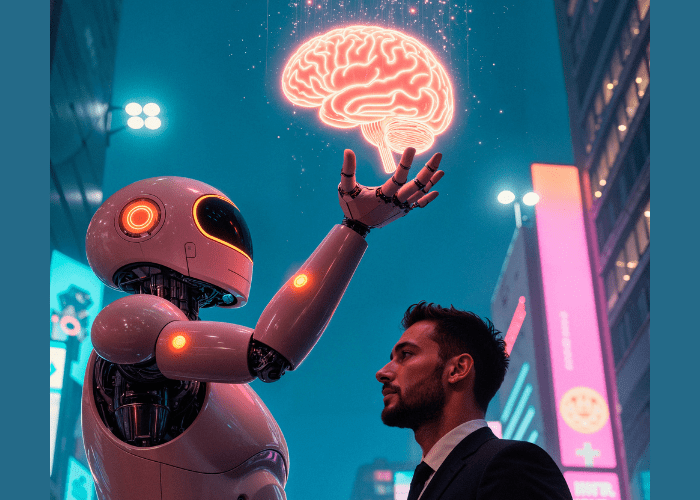
Employee Experience (EX) is critical for employee engagement and for enhancing productivity and workplace culture. It is informed by six core relational attributes that employees interact with: the work they do, the places they work in, the diversity of people they work with, the technology they use, the organisation they work for, and their personal well-being and inclusion.
According to Deloitte’s global ‘State of AI in the Enterprise’ report, 94 per cent of business leaders agree that artificial intelligence (AI) is critical for success. This same study also found that over 60 per cent of business owners believe AI will increase productivity and 42 per cent believe it would streamline job processes.
With the increased digitalisation at the workplace, the use of AI to enhance Employee Experience through the employee lifecycle is gaining importance. The key focus areas are: talent acquisition, onboarding and employee engagement, training and development, performance management, employee well-being and task automation.
Talent acquisition (TA): This has been a leading area of HR in its technological progress and introduction of AI. TA experts across the world see the biggest opportunity with GenAI in automating repetitive tasks (74 per cent), sourcing candidates faster (67 per cent) and engaging with candidates easily (59 per cent) . GenAI is also being leveraged by candidates to optimise their job applications (for instance, to refine application material, generate practice interview questions, cross- compare resumes to job descriptions, and so on). Other more advanced uses include AI-powered video interviews to assess personality and behavioural traits of candidates for leadership positions through language and sentiment analysis. The reliability of some of these used cases is still being researched.
Onboarding and employee engagement: In addition to answering questions, AI chatbots can make the right resources and information available to new hires to help in seamless onboarding. They can also check employee sentiment at critical stages of the employee life cycle and make those insights available to the managers and HR for taking timely action.
Training and development: Artificial intelligence has been used to create personalised learning experiences for employees with specific development areas based on individual skill gaps. For example, virtual reality/augmented reality (VR/AR) captures reactions in real time to deliver adaptive learning tailored to the individual. Augmented reality (AR) wearables are being leveraged to overlay learning on top of physical reality to provide on-the-job training and feedback. Learning Management Systems recommend the right learning content based on the employee’s role and career preferences. Other new innovative AI-powered tools create profiles adjusted to employees’ implicit needs across emotionality, background, age, pronunciation, voice, and so on to convey information in a way that will best reach the individual. Such technologies can help employees to develop their skills and knowledge in a more personalised way. Skill gap can be assessed by building a taxonomy specific to an organisation and mapping it to individual employee profiles. This creates a clear overview of available skills and potential gaps. The presence of these solutions in the market is rising and there are opportunities for organisations to introduce such technologies, underpinned by complementary policies and processes.
Performance management: Some organisations are using AI to track employee performance and identify areas for improvement (for example, customer-relationship management tools that analyse sales data for employees and highlight success against targets, project-management tools that adjust individual workload based on real-time task completion, and so on). This can help managers provide more insights-driven and targeted coaching to better support their team members while helping employees in progressing in their career journeys. However, ‘Algorithmic Performance Management’ is a double-edged sword, and there are ethical and privacy related concerns of employees that need to be addressed before large scale adoption.
Employee wellbeing: Many organisations are taking steps to address the overall wellbeing of employees and create an environment to make humans better at work by relying on new technology and AI. Artificial intelligence is embedded in many technologies to collect data from employees (through sentiment analysis). This information is used to understand the pulse of the employee and identify areas where the company can improve with targeted initiatives. Organisations are also leveraging wearables and accompanying mobile apps that offer employees suggestions for increasing feelings of happiness (e.g., personalised meditative sessions, health tracking, customised workout, and meal plans) that positively impact their wellbeing. While these are examples of well-being programmes leveraging technology through wearables and apps, it is crucial to remember that these tools aren’t the sole solution to achieving a happy and healthy workforce. These solutions should complement policies, processes and practices.
Task automation: Repetitive tasks can be automated using AI, freeing up employees to focus on more strategic and creative work. This not only increases efficiency but also job satisfaction.
While the benefits and opportunities of introducing AI are often discussed, it is important to strike the right balance between humans and automation. There are important ethical, and transparency-related concerns that need to be addressed. There is a greater need to understand what the impact of these technologies will be on the people who are interacting with them. Ultimately, the usage of AI must make organisations more human and empathetic.
This article is written by Vivek Mani Tripathi, CHRO, Newgen Software Technologies
