


Technology consulting operates at brutal velocity. Client expectations shift mid-engagement, technology stacks evolve quarterly, and delivery models reinvent themselves annually. In this environment, accumulated expertise depreciates rapidly whilst the ability to learn, adapt and frame problems across domains becomes the scarcest resource.
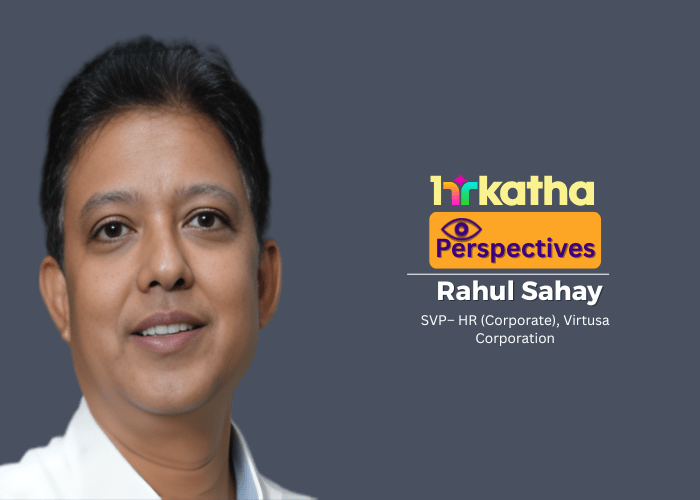
Rahul Sahay, senior vice president – HR (Corporate) at Virtusa Corporation, operates within these realities daily. In conversation, he articulates why future-ready talent requires depth in two areas plus working knowledge across a third, why diversity delivers measurable business outcomes when embedded in operations rather than positioned as HR programmes, and why exceptional HR leaders engineer capability and business momentum rather than merely managing processes.
From T-shaped to π-shaped
Are you hiring for skills that exist today or capabilities to learn what doesn’t exist yet? What does future-ready talent mean at Virtusa?
Future readiness depends less on static expertise and more on the ability to stay relevant in a high-velocity environment. We look for three qualities: digital proficiency to work comfortably with data and technology; a structured approach to problem framing that links technical understanding with business realities; and a mindset that accepts constant change through curiosity, adaptability and learning agility.
Talent models have evolved accordingly. The industry has shifted from I-shaped specialists to T-shaped talent and now to π-shaped professionals who develop depth in at least two areas and working knowledge across a third. Virtusa’s emphasis on blended learning, mentoring and adjacent-skill readiness has strengthened this model across delivery teams.
Role-specific skills continue to matter, but adjacent skill readiness, learning velocity and evidence of continuous reskilling signal future readiness far more reliably than any fixed certification list. These attributes allow individuals to transition smoothly as technologies and business models shift.
“Data creates visibility; insight creates better decisions”
DEI as business strategy
How do you make D&I a business strategy, not just an HR programme? What’s your most compelling business case for diversity?
Diversity and inclusion become powerful business strategies when embedded into core operations rather than positioned as HR-led initiatives. Global research links inclusion with stronger profitability, innovation and long-term resilience. Diverse teams reduce blind spots in solution design, improve problem framing and enhance relevance to global markets.
At Virtusa, DEI is woven into how the organisation operates. Leadership charters, talent development initiatives, learning pathways and workforce policies are designed to create fair access and strengthen a culture where diverse perspectives are valued. Initiatives such as returnship programmes for women on career breaks, mentorship networks and inclusive hiring practices expand the available talent pool and help balance long-term workforce needs.
Inclusion is also embedded in client-facing teams, where diverse perspectives improve delivery outcomes and solution relevance. When D&I influences hiring, development, leadership succession and customer experience, it becomes a strategic engine for growth rather than a standalone programme.
The Virtusa Foundation strengthens this commitment further through its focus on Education, Empowerment and Environment, supporting equitable access to learning and creating opportunities for underrepresented groups. This alignment between organisational priorities and community impact reinforces inclusion as both a business imperative and a societal commitment.
“Exceptional HR leaders don’t just manage people—they engineer capability and business momentum”
Community fosters confidence, integration drives change
Do ‘Employee Resource Groups’ inadvertently become echo chambers that segregate rather than integrate? How do you balance community with broader inclusion?
Employee Resource Groups play an important role in creating psychological safety, especially for underrepresented employees. They provide environments where individuals feel comfortable expressing concerns and seeking support. The risk arises when these spaces remain disconnected from the broader organisation, limiting their influence on culture and decision-making.
The most effective ERGs operate as bridges. A clear charter that links their work to business priorities ensures their perspectives inform hiring, policies, accessibility and client engagement. Regular interaction with senior leaders helps insights translate into action. Storytelling and role modelling across functions allow successful experiences to become part of organisational culture.
Community fosters confidence. Integration drives change. Both are essential for building inclusive cultures that sustain long-term performance.
“Employee communities build confidence, but integration is what drives cultural change”
HR as capability engineer
For young HR professionals aspiring to work in IT consulting and technology, what’s misunderstood about HR in this industry? What skills differentiate a great HR leader from someone who’s just competent?
A common misconception is that HR in technology functions primarily as an administrative or support team. In reality, HR plays a central role in shaping talent readiness, delivery excellence and client satisfaction. Strong HR leaders in this sector are grounded in business literacy and understand how client expectations, margin structures and technology architectures influence talent needs.
What differentiates impactful HR leaders is multidimensional capability. They blend education, experience and exposure to create learning pathways that accelerate productivity. They use data-driven insights to strengthen workforce planning. They bridge generational diversity through mentoring and capability-building. Above all, they anticipate industry transitions and prepare the talent supply chain to navigate the next S-curve of technology evolution.
Competent HR professionals manage processes. Exceptional HR leaders engineer capability and business momentum.
“Diversity becomes powerful only when it is embedded in operations, not managed as an HR programme”
Three metrics that matter
If you had to defend HR’s value using only three metrics that truly matter to the CEO and the board, what would they be?
When evaluating HR’s enterprise value, the metrics that matter most are those that directly influence organisational continuity, market competitiveness and workforce productivity.
Leadership pipeline strength—assessed through talent review and succession planning—reflects the organisation’s ability to fill critical roles with ready and capable leaders. This signals long-term stability and preparedness for future growth.
Employer-of-choice benchmarks and best employer ratings in relevant markets offer an objective measure of cultural strength and talent-market competitiveness.
Technology-enabled talent lifecycle metrics—digital adoption rates, cycle-time reductions, learning velocity—provide measurable insights into how effectively employees are supported and empowered. These indicators reflect the direct link between employee experience and enterprise productivity.
“Future-ready talent isn’t defined by what you know today, but by how fast you can learn what doesn’t yet exist”
The mentors who shaped perspective
What was the most important decision or experience that shaped you as a people leader?
My career growth has been shaped most meaningfully by the presence of strong mentors. The guidance, challenge and clarity offered at pivotal moments helped strengthen my judgement, broaden perspective and build confidence in navigating complex people decisions. Those influences created the foundation for a more grounded and balanced approach to people leadership.
For someone beginning a career in HR at 25, one piece of advice stands out: develop a point of view and express it assertively and confidently. HR adds real value when it brings clarity, frames issues accurately and is unafraid to articulate well-reasoned perspectives. Building this confidence early, supported by continuous learning and reflective practice, becomes a defining capability for long-term growth.
“In technology consulting, expertise depreciates fast; relevance compounds”
Own your oars
What’s one unwritten rule in your organisation or industry that you wish more people understood earlier in their careers?
One unwritten rule that shapes long-term success is the understanding that each individual owns the oars to their success. Career progression is not solely determined by systems, managers or organisational processes. It is driven by how intentionally a person steers their growth, seeks opportunities, builds capability and shows readiness for greater responsibility. Those who take ownership of their development tend to move further and faster.
Equally important is the balance between ability and humility. High competence opens doors, but humility determines how effectively someone can learn, collaborate and influence. People who combine strong capability with openness to feedback, respect for peers and a willingness to grow often build deeper trust and stronger leadership potential.
Understanding this early helps professionals navigate complex environments with clarity and maturity.