
Close Menu
    Facebook X (Twitter) Instagram
    • Our Story
    • Partner with us
    • Reach Us
    • Career
    Subscribe Newsletter
    HR KathaHR Katha
    • Exclusive
      • Exclusive Features
      • HR Pops
      • herSTORY
      • Perspectives
      • Point Of View
      • Case-In-Point
      • Research
      • Dialogue
      • Movement
      • Profile
      • Beyond Work
      • Rising Star
      • By Invitation
    • News
      • Global HR News
      • Compensation & Benefits
      • Diversity
      • Events
      • Gen Y
      • Hiring & Firing
      • HR & Labour Laws
      • Learning & Development
      • Merger & Acquisition
      • Performance Management & Productivity
      • Talent Management
      • Tools & Technology
      • Work-Life Balance
    • Special
      • Cover Story
      • Editorial
      • HR Forecast 2024
      • HR Forecast 2023
      • HR Forecast 2022
      • HR Forecast 2021
      • HR Forecast 2020
      • HR Forecast 2019
      • New Age Learning
      • Coaching and Training
      • Learn-Engage-Transform
    • Magazine
    • Reports
      • Whitepaper
        • HR Forecast 2024 e-mag
        • Future-proofing Manufacturing Through Digital Transformation
        • Employee Healthcare & Wellness Benefits: A Guide for Indian MSMEs
        • Build a Future Ready Organisation For The Road Ahead
        • Employee Experience Strategy
        • HRKatha 2019 Forecast
        • Decoding and Driving Employee Engagement
        • One Platform, Infinite Possibilities
      • Survey Reports
        • Happiness at Work
        • Upskilling for Jobs of the Future
        • The Labour Code 2020
    • Conferences
      • Leadership Summit 2025
      • Rising Star Leadership Awards
      • HRKatha Futurecast
      • Automation.NXT
      • The Great HR Debate
    • HR Jobs
    WhatsApp LinkedIn X (Twitter) Facebook Instagram
    HR KathaHR Katha
    Home»Exclusive Features»Point Of View»POV: Is work–life balance an employee responsibility or a leadership failure?
    Point Of View

    POV: Is work–life balance an employee responsibility or a leadership failure?

    Where does responsibility for work–life balance really begin—and where does it end?
    mmBy Radhika Sharma | HRKathaJanuary 5, 2026Updated:January 6, 20263 Mins Read13425 Views
    Share LinkedIn Twitter Facebook
    work–life balance
    Share
    LinkedIn Twitter Facebook

    On most weekdays, the debate around work–life balance doesn’t play out in HR policies or leadership town halls. It plays out quietly—when a meeting runs past dinner time, when a family event clashes with a deadline, or when someone shuts their laptop feeling guilty for doing so. In these moments, the question isn’t theoretical. It’s deeply personal.

    Is balance something employees must learn to manage better, or is it something leaders fail to enable? The truth, as most lived experiences suggest, sits somewhere in between. Work–life balance today is shaped less by slogans and more by daily decisions—by how individuals prioritise, and by the signals organisations send about what truly matters.


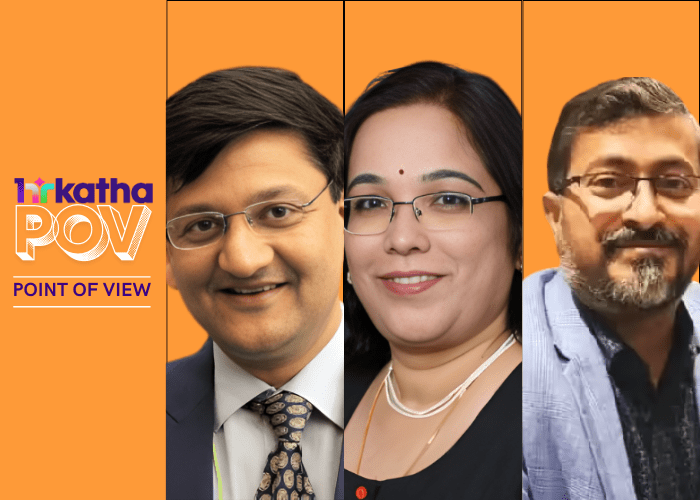
    Pankaj Lochan, CHRO, Navin Fluorine

     The phrase ‘work–life balance’ itself is flawed because it assumes work and life are opposing forces. Work is an integral part of life—it sustains families, enables choices and shapes identity. Treating it as something to constantly escape from creates a false conflict.

    Rather than framing balance as a tug-of-war, I place responsibility on individual judgment. I break life into three practical buckets: necessity, comfort and luxury—a 10–20–70 framework. Necessities, such as a family illness or critical personal obligation, must always take precedence, even if work suffers. Comfort lies in the grey zone—events that can be negotiated. Luxury, which forms the bulk of everyday wants, is where trade-offs are easiest.

    The danger lies at the extremes. When employees treat all personal choices as non-negotiable rights, accountability erodes. When leaders deny even genuine necessities, trust collapses and long-term damage follows. Balance is not about equal hours—it’s about discerning what truly matters, when.

    Calling every conflict a leadership failure oversimplifies reality. Balance is achieved when individuals exercise maturity, and leaders allow space for what is genuinely non-negotiable.

    Takeaway: Work isn’t separate from life—balance comes from mature judgment about what truly matters, not from treating work as the enemy.


    Nita Nambiar, chief people officer, Hexaware Technologies

    I question whether balance, as commonly imagined, is even achievable. In a world of hybrid work, global teams and constantly shifting roles, the idea of neatly dividing work and life into fixed time slots is unrealistic—and often frustrating.

    The real skill is prioritisation, not balance. Different phases of life demand different trade-offs, and expecting constant equilibrium sets people up for guilt rather than clarity. Employees must learn to make conscious choices, set boundaries and accept that not everything can be equally prioritised all the time.

    But this responsibility cannot exist in isolation. Leaders play a critical role in ensuring that prioritisation is respected in practice—not just spoken about. When organisations value outcomes over visibility, and flexibility over performative presence, employees feel safer making those choices honestly.

    Balance is in motion rather than in measurement. It’s not something leaders ‘provide’ or employees ‘claim,’ but something continuously negotiated through expectations, trust and clarity.

    Takeaway: Balance is a myth—prioritisation is the reality, and it requires both employee clarity and leadership trust to work effectively.


    Culture diversity Employee Employee Benefits Employee Engagement employees employer Employment Engagement Human Resources Productivity Recruitment Skill Development Training Workforce Workplace Work–life balance
    Share. LinkedIn Twitter Facebook
    mm
    Radhika Sharma | HRKatha

    Radhika is a commerce graduate with a curious mind and an adaptable spirit. A quick learner by nature, she thrives on exploring new ideas and embracing challenges. When she’s not chasing the latest news or trends, you’ll likely find her lost in a book or discovering a new favourite at her go-to Asian eatery. She also have a soft spot for Asian dramas—they’re her perfect escape after a busy day.

    Leave A Reply Cancel Reply

    Related Posts

    Washington Post announces major layoffs; 300+ affected

    February 5, 2026

    Ranjeeta Bhat is starting a new position as VP-corporate HR, Premier Energies

    February 4, 2026

    Aditi Nair moves from Practus to APAC Financial Services as CPO

    February 4, 2026

    Why Uttar Pradesh has suspended salaries of 68,000+ employees

    February 4, 2026
    Editorial

    Why “Remove HR” goes viral every few years, and why it never happens

    Last week, workforce strategist Amanda Goodall reignited the cycle by calling to “remove 90 per…

    What Davos revealed about work: Five uncomfortable truths

    Harvard economist Gita Gopinath delivered Davos’s most uncomfortable statistic: since the 1980s, only 30 per…

    EDITOR'S PICKS

    88% are spending more on AI; Just 5% are using it strategically

    February 4, 2026

    HR perspectives by Beena Jacob: “Insight without judgement is noise”

    February 4, 2026

    What Budget 2026 actually changes for HR

    February 3, 2026

    Antifragile workers: Thriving on chaos

    February 3, 2026
    Latest Post

    Washington Post announces major layoffs; 300+ affected

    Layoff February 5, 2026

    The Washington Post has announced that it will lay off one-third of its workforce, a…

    Ranjeeta Bhat is starting a new position as VP-corporate HR, Premier Energies

    Movement February 4, 2026

    After four years of successfully serving Dr Reddy’s Laboratories as director-human resources, Ranjeeta Bhat has…

    Aditi Nair moves from Practus to APAC Financial Services as CPO

    Movement February 4, 2026

    After serving Practus for over five years, Aditi Nair has moved to APAC Financial Services…

    88% are spending more on AI; Just 5% are using it strategically

    Research February 4, 2026

    Somewhere between ambition and execution lies a chasm that is swallowing corporate HR’s AI investments…

    Asia's No.1 HR Platform

    Facebook X (Twitter) Instagram LinkedIn WhatsApp Bluesky
    • Our Story
    • Partner with us
    • Career
    • Reach Us
    • Exclusive Features
    • Cover Story
    • Editorial
    • Dive into the Future of Work: Download HRForecast 2024 Now!
    © 2026 HRKatha.com
    • Disclaimer
    • Refunds & Cancellation Policy
    • Terms of Service

    Type above and press Enter to search. Press Esc to cancel.