

Close Menu
    Facebook X (Twitter) Instagram
    • Our Story
    • Partner with us
    • Reach Us
    • Career
    Subscribe Newsletter
    HR KathaHR Katha
    • Exclusive
      • Exclusive Features
      • Perspectives
      • Friday Features
      • herSTORY
      • Rising Stars
      • Case-In-Point
      • Point Of View
      • Research
      • HR Pops
      • Dialogue
      • Movement
      • Profile
      • Beyond Work
      • By Invitation
    • Brief News
      • Global HR News
      • Compensation & Benefits
      • Diversity
      • Events
      • Gen Y
      • Hiring & Firing
      • HR & Labour Laws
      • Learning & Development
      • Merger & Acquisition
      • Performance Management & Productivity
      • Talent Management
      • Tools & Technology
      • Work-Life Balance
    • Special
      • Editorial
      • HR Forecast 2026
      • Cover Story
      • HR Forecast 2024
      • HR Forecast 2023
      • HR Forecast 2022
      • HR Forecast 2021
      • HR Forecast 2020
      • HR Forecast 2019
      • New Age Learning
      • Coaching and Training
      • Learn-Engage-Transform
    • Studio
      • The CHRO Playbook
      • Quick HR Insights
      • The Corner Office
    • Reports
      • Whitepaper
        • HR Forecast 2024 e-mag
        • Future-proofing Manufacturing Through Digital Transformation
        • Employee Healthcare & Wellness Benefits: A Guide for Indian MSMEs
        • Build a Future Ready Organisation For The Road Ahead
        • Employee Experience Strategy
        • HRKatha 2019 Forecast
        • Decoding and Driving Employee Engagement
        • One Platform, Infinite Possibilities
      • Survey Reports
        • Happiness at Work
        • Upskilling for Jobs of the Future
        • The Labour Code 2020
    • Forums
      • HRKatha Inner Circle
      • HRKatha Futurecast
      • Leadership Summit 2025
      • Rising Star Leadership Awards
      • HRKatha Futurecast 2025
      • Automation.NXT
      • The Great HR Debate
    WhatsApp LinkedIn X (Twitter) Facebook Instagram
    HR KathaHR Katha
    Home»Exclusive Features»Point Of View»POV: Should employees be encouraged to build personal brands alongside company roles?
    Point Of View

    POV: Should employees be encouraged to build personal brands alongside company roles?

    As employees increasingly become voices in their own right, HR leaders weigh the freedom to build personal brands against the need to protect organisational values, confidentiality and reputation
    mmBy Radhika Sharma | HRKathaSeptember 21, 2026Updated:September 21, 20265 Mins Read8682 Views
    Share LinkedIn Twitter Facebook WhatsApp
    personal brands
    Share
    LinkedIn Twitter Facebook WhatsApp

    There was a time when an employee’s professional identity was largely confined to the organisation they worked for. Today, that boundary is far less defined. A LinkedIn post, an industry comment, a panel appearance or even a personal take on a workplace trend can travel far beyond an employee’s immediate professional circle.

    As employees increasingly build visibility and credibility in their own names, organisations are finding themselves navigating a new question: should they actively encourage employees to build personal brands, or does greater visibility also create greater risk?

    For HR leaders, the answer appears to lie somewhere between freedom and guardrails. While personal branding can strengthen employee confidence and, in some cases, amplify the employer brand, it also raises questions around confidentiality, reputation and alignment with organisational values.


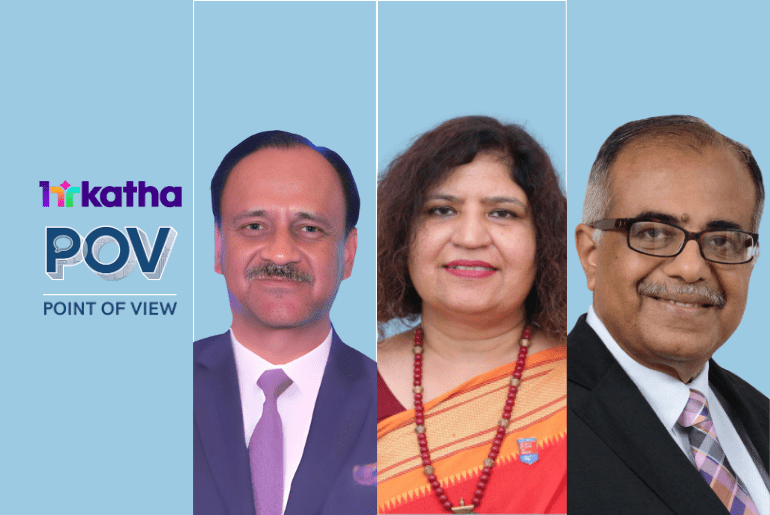
    Sanjay Bose, Executive Vice President – HR, ITC Hotels

    Yes, but three boundaries must remain clear.

    I believe personal branding and organisational responsibility can coexist, provided we strike the right balance on three counts.

    First, as an employee, I must ensure that the personal views I express are not in direct conflict with what my organisation stands for. If they are, I must question whether it is appropriate to express them publicly while I remain associated with the organisation.

    Second, building my personal brand does not exempt me from the company’s social media policy. My freedom of expression must operate within the boundaries of that policy.

    The third consideration, however, works the other way. Organisations must also recognise where their authority ends and an individual’s freedom begins. Restrictions should be confined to matters that legitimately concern the organisation.

    For instance, as a CHRO, I may be privy to certain HR practices, processes or information that constitute intellectual property, trade secrets or confidential organisational information. Clearly, I cannot disclose these in a public forum.

    But my professional knowledge, experience and perspectives on HR are also part of my individual identity. An organisation should not seek to restrict my ability to share these simply because I happen to work for it.

    Ultimately, an organisation employs an individual’s services; it does not acquire ownership of their professional wisdom.

    Takeaway: Personal branding works best when organisations protect what legitimately belongs to them while allowing individuals the freedom to express what inherently belongs to them — their knowledge, experience and professional perspectives.


    KA Narayan, President – HR, Raymond

    Yes, but only with a clear governance framework in place.

    Encouraging employees to build personal brands and use social media to share their professional perspectives comes with genuine reputational risk. That risk needs to be managed thoughtfully, not ignored.

    At Raymond, we have put together a set of guidelines around social media usage, developed with our corporate communications team, to create a governance mechanism that reduces the risk of reputational damage without curtailing legitimate expression. Social media is a reality today, and employees have every right to communicate freely through the channels they choose. The goal is not to restrict that freedom but to ensure it is exercised responsibly.

    Navigating this well requires ongoing attention. Guidelines need to be socialised across the organisation, and the boundaries between sharing professional views and potentially damaging the brand need to be made clear. What is acceptable is not always obvious, and organisations are still learning what works.

    The honest reality is that this is a tightrope walk. Organisations that get it right will benefit from the visibility and credibility their employees build. Those that get it wrong may find that the personal brand comes at the cost of the organisational one.

    Takeaway: Encouraging personal brands requires a clear governance framework that protects the organisation’s reputation without turning social media guidelines into restrictions on legitimate employee expression.


    Ashu Sawhney, Chief Human Resources Officer, DCB Bank

    Yes, and structured platforms can make personal and employer branding mutually reinforcing.

    At DCB Bank, we have approached this by creating platforms that give employees genuine opportunities to build visibility in an authentic way. Initiatives such as regional recognition forums, DCB Spotlight and our annual Movers & Shakers awards allow employees to celebrate achievements and share their journeys in ways that feel meaningful rather than performative.

    Employees often take to social media to highlight these recognitions, tagging the bank and sharing the context behind the achievement. That organic activity amplifies both the individual’s professional profile and the employer brand simultaneously.

    Annual meets that include opportunities to share personal stories and reflect on growth journeys strengthen this further. When employees articulate their own impact and development, they are not just building a personal brand; they are contributing to a credible, human narrative about what the organisation actually stands for.

    The result is a virtuous cycle. Individual success stories strengthen the organisational brand, and the organisation, in turn, provides credible platforms and opportunities for employees to build authentic professional identities. Neither comes at the expense of the other.

    Takeaway: Organisations can encourage personal branding by creating authentic platforms where individual visibility and employer branding reinforce each other naturally.

    Culture diversity Employee Employee Benefits Employee Engagement employees employer Employment Engagement HR Human Resources LEAD personal brands POV Productivity Recruitment Skill Development Training Workforce Workplace
    Share. LinkedIn Twitter Facebook WhatsApp
    mm
    Radhika Sharma | HRKatha

    Radhika is a commerce graduate with a curious mind and an adaptable spirit. A quick learner by nature, she thrives on exploring new ideas and embracing challenges. When she’s not chasing the latest news or trends, you’ll likely find her lost in a book or discovering a new favourite at her go-to Asian eatery. She also have a soft spot for Asian dramas—they’re her perfect escape after a busy day.

    Leave A Reply Cancel Reply

    Related Posts

    Nitesh Madan takes charge as CHRO at Siddharth Grease & Lubes

    November 6, 2026

    Apple cuts employee AI spending limits

    November 6, 2026

    Block offers laid-off US employees up to 90 days of pay

    November 6, 2026

    Chandreyi Das Sharma joins Generac as regional HR – APAC

    November 6, 2026
    zoha
    Editorial

    Hard work built India’s global reputation. Availability cannot define its future

    I must have been in school when I first heard the slogan. I was passing…

    The rift between the corner office and the floor below

    A general manager at a large Indian steel conglomerate recently described an exchange with his…

    EDITOR'S PICKS

    The HR question that has no perfect answer

    November 6, 2026

    herSTORY: Nandini Matiyani, GCHRO, Strides

    November 5, 2026

    Case-in-Point: The internal whistleblower bypass

    November 5, 2026

    HR Perspectives by Dev Jha: “Engagement scores are not the same as commitment”

    November 4, 2026
    Latest Post

    Nitesh Madan takes charge as CHRO at Siddharth Grease & Lubes

    Movement November 6, 2026

    Nitesh Madan has joined Siddharth Grease & Lubes as chief human resources officer (CHRO), taking…

    Apple cuts employee AI spending limits

    Brief News November 6, 2026

    Apple has reduced the amount employees can spend on artificial intelligence (AI) tools, tightening internal…

    Block offers laid-off US employees up to 90 days of pay

    Brief News November 6, 2026

    Fintech company Block is offering laid-off employees in the US at least 60 days of…

    Chandreyi Das Sharma joins Generac as regional HR – APAC

    Movement November 6, 2026

    Generac has appointed Chandreyi Das Sharma as regional HR – APAC, bringing in a human…

    Asia's No.1 HR Platform

    Facebook X (Twitter) Instagram LinkedIn WhatsApp Bluesky
    • Our Story
    • Partner with us
    • Career
    • Reach Us
    • Exclusive Features
    • Cover Story
    • Editorial
    • Dive into the Future of Work: Download HRForecast 2024 Now!
    © 2026 HRKatha.com
    • Disclaimer
    • Refunds & Cancellation Policy
    • Terms of Service

    Type above and press Enter to search. Press Esc to cancel.