


Most organisations build HR infrastructure after establishing business operations. First comes market strategy, brand positioning, and revenue targets. Then, often years later, comes systematic talent development, structured career paths, and cultural codification. People practices get retrofitted onto existing structures, creating friction between legacy habits and new aspirations.
Tata Consumer Products is attempting something different. Five years into merging legacy tea and coffee businesses with new ventures spanning foods and beverages, the company is building people systems simultaneously with business transformation. HR isn’t following strategy—it’s developing alongside it.
“We don’t have a stand-alone people strategy,” says Tarun Verma, global CHRO, Tata Consumer Products. “We have an integrated People Agenda that powers the business.” The company describes itself as “15 minutes into a three-hour movie”—deliberately owning its work-in-progress status rather than claiming premature maturity.
Whether developing HR and business strategy in parallel leads to stronger outcomes, or risks creating ambiguity as both evolve simultaneously, is a question worth examining.
The merger challenge
Tata Consumer Products was created by thoughtfully bringing together multiple Tata Group businesses—uniting diverse cultures, geographies, and product portfolios into a single, future-focused organisation. Legacy tea operations with over a century of expertise came together with fast-growing food ventures and global acquisitions, creating a rich blend of experience and innovation. This consolidation offered an opportunity to harmonise cultures, streamline systems, and align priorities around a shared vision, laying the foundation for a more integrated and agile consumer company.
“We don’t have a stand-alone people strategy. We have an integrated People Agenda that powers the business.”
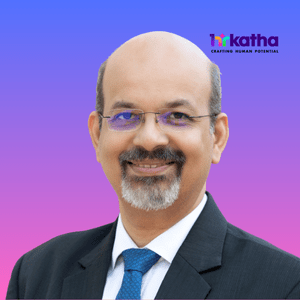
Tarun Verma, global CHRO, Tata Consumer Products
The company’s response centres on what Verma calls building “adaptive” people systems. Rather than imposing rigid structures, TCPL designed what it describes as a People Agenda integrated with six strategic pillars and eleven core processes spanning the employee lifecycle.
The company describes these as ‘adaptive’ people systems designed to evolve with business strategy. This approach requires continuous refinement as both elements develop—a complexity that demands consistent attention to ensure systems provide sufficient clarity for employees whilst remaining flexible enough to accommodate strategic shifts.
Verma frames the approach positively: “We are a WIP (work in progress) company. Processes and culture are being shaped simultaneously through our North Star journey.” This framing reflects a candid acknowledgment of organisational complexity and change, while also underscoring an intent to build systems that evolve thoughtfully rather than rigidly—aiming for infrastructure that strengthens over time as the organisation matures.
Flexibility through values
TCPL’s hybrid work approach attempts balancing Tata Group’s traditional values with FMCG’s execution demands. The company frames flexibility as “trust that employees will align their personal compass with Tata values, even when no one is watching.”
The philosophy is compelling, even as it invites important questions. How does an organisation meaningfully assess values alignment in largely unsupervised environments? And how are potential trade-offs managed when flexibility enhances individual performance but challenges team cohesion? While TCPL does not dwell extensively on these tensions, it acknowledges them implicitly through its focus on outcomes rather than oversight.
The company cites sustained productivity and engagement indicators as signals that the approach is delivering results. As with most organisational claims, these metrics benefit from careful interpretation—particularly in the absence of direct comparisons with alternative models. Even so, the consistency of these indicators proves that TCPL’s flexibility-led approach is being monitored closely and refined as part of an ongoing learning process, rather than positioned as a one-size-fits-all solution.
More substantively, TCPL has integrated wellness initiatives with flexible work rather than treating them as separate programmes. Physical, emotional, and mental wellbeing support complements autonomy, theoretically preventing flexibility from enabling burnout. Whether such integration actually works depends entirely on implementation—many organisations announce holistic wellness whilst employees experience it as additional mandatory programmes consuming time flexibility was supposed to create.
The full lifecycle approach
TCPL claims to view every employee as both former candidate and potential alumnus, reshaping how journeys are designed. Prospective employees supposedly engage with annual reports and brand positioning before applying. Selection processes balance virtual efficiency with “human connection.” Onboarding combines digital tools with buddy programmes and leadership touchpoints.
This holistic view of employee experience reflects a high degree of contemporary HR maturity. It also mirrors an ambition shared by many organisations, though execution often varies in practice. The real measure of success lies not only in the thoughtfulness of the design, but in the consistency of its application—how effectively these processes translate across geographies, business units, and employee levels, and the extent to which they are experienced with equal impact both at headquarters and across the wider organisation.
Career progression supposedly receives support through programmes including Aarohan, Aspire, Leadership Voyages, and Leadership Horizons. The proliferation of branded initiatives can signal genuine investment in development or simply create confusion through overlapping programmes with unclear distinctions.
TCPL positions cross-functional mobility as a way to build “transformation readiness,” a concept grounded in sound organisational logic. Exposure to multiple business areas can broaden perspective, deepen enterprise understanding, and strengthen adaptability. The key consideration is how widely and systematically such mobility is enabled—ensuring it becomes an accessible development pathway across the organisation rather than an opportunity experienced by only a select few.
Diversity as innovation driver
TCPL positions inclusion as business imperative rather than moral obligation. Women comprise 31 per cent of the global workforce with equal pay across roles—meaningful progress in an industry where gender representation often lags, though the company continues working toward broader balance.
The company maintains Employee Resource Groups, campus recruitment across diverse geographies, and sensitisation workshops. These standard diversity practices deserve recognition for existing.
More interesting is TCPL’s claim that diversity has “sparked innovation—particularly in R&D, marketing, and international business teams where gender balance and diversity of thought are critical.”
While such linkages between diversity and innovation are often articulated in corporate narratives, their true impact is best understood through outcomes. Assessing whether TCPL’s innovation pace or quality meaningfully outperforms less-diverse peers would require comparative data that is not publicly available. In the absence of this, the claim is best viewed as an ambition the organisation is actively working towards, rather than a conclusively proven advantage.
The company connects internal diversity efforts with CSR initiatives building sustainable livelihoods externally. This integrated thinking about inclusion inside and outside organisational boundaries demonstrates sophisticated perspective, assuming genuine implementation rather than simply parallel programmes claiming artificial connection.
Learning as transition enabler
TCPL treats learning as normalised rather than mandated, offering digital ecosystems with curated content, certifications, and leadership pathways. SkillUP #ForBetter supposedly empowers employees to choose learning aligned with career goals.
The company highlights examples of employees moving from sales roles into digital and analytics positions, pointing to learning as an enabler of meaningful career transitions. These stories are encouraging and illustrate what is possible when capability building is aligned with opportunity. Understanding the scale and consistency of such transitions over time—across roles, cohorts, and benchmarks—would further strengthen the narrative, helping distinguish individual success stories from a broader, systemic capability in action.
TCPL leverages the broader Tata ecosystem through TMTC (Tata Management Training Centre) and cross-company exposure. This access to Tata Group resources provides genuine advantages smaller standalone companies cannot match—though it also means TCPL’s approach may prove difficult for others to replicate.
Verma emphasises that learning organisations are “measured by curiosity, relevance and ownership—qualities that enable both individual and organisational reinvention.” While these attributes may not always lend themselves to easy measurement, they reflect a deeper cultural orientation that encourages initiative, continuous learning, and accountability, shaping how the organisation evolves and stays relevant over time.
Technology as amplifier
TCPL uses AI and digital tools for talent analytics, predictive insights, personalised learning, and process efficiency. Hiring automation manages scale whilst “freeing HR professionals to focus on conversations that assess attitude, cultural fit, and potential.”
The guiding philosophy of “digital for efficiency, human for empathy” reflects a thoughtful and contemporary view of how technology can complement, rather than replace, human judgement.
Beyond efficiency, the organisation highlights its focus on bias sensitisation and capability building to ensure that technology-enabled processes remain fair and inclusive. While the impact of such interventions is best understood over time, their inclusion signals an awareness that responsible use of technology requires continuous learning, reflection, and sustained attention—not just tools, but intent.
The perpetual beta question
TCPL’s embrace of work-in-progress identity offers both advantages and risks. Describing the organisation as “15 minutes into a three-hour movie” signals humility and adaptability—valuable qualities during transformation. It also potentially provides perpetual excuse for systems that never quite deliver promised functionality.
Verma’s assertion that “growth must be experienced, not declared” captures an important truth about organisational development. But at some point, transformation requires consolidation. People systems need sufficient stability for employees to understand expectations, plan careers, and experience consistent treatment across organisation.
TCPL’s embrace of work-in-progress identity signals both humility and adaptability during transformation. The company’s integrated approach to people systems and business development represents an ambitious experiment in organisational design. Whether this simultaneous development produces advantages over conventional sequential approaches will likely become evident through business performance and talent outcomes over the coming years.