



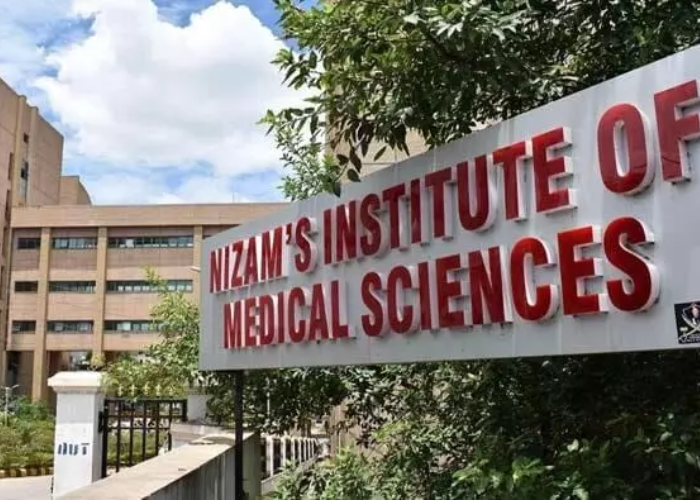
In a significant relief for staff at the Nizam’s Institute of Medical Sciences (NIMS), the Telangana government has approved the encashment of earned leave, ending years of uncertainty around the benefit. The decision was formalised on Monday, 29 December, 2025, with the issuance of a government order, marking a long-awaited policy shift for employees of the premier healthcare institution.
For a considerable period, regular NIMS employees were excluded from the provision to encash earned leave, despite being placed on pay scales aligned with those followed at AIIMS.

This gap had been a persistent concern among employees, who felt that their service conditions were not fully aligned with comparable institutions. Employee associations and unions repeatedly flagged the issue, seeking parity with other state government employees.
The matter gained momentum after representations were recently made by members of the Hospital Nursing Association, who highlighted the practical and financial implications of the absence of leave encashment. The issue was subsequently examined at the departmental level, leading to internal discussions and administrative consultations.
Following these deliberations, the state government cleared the proposal, allowing NIMS employees to surrender their accumulated earned leave and receive cash benefits. The encashment will be governed by the Telangana Leave Rules, 1933, which are applicable to state government personnel. The formal order enabling this change was issued by the Health Department, bringing NIMS staff under the same framework followed by other government employees in the state.
The move is being seen as an acknowledgment of the sustained efforts and contributions of NIMS employees, particularly in a high-pressure healthcare environment. Within the institute, the decision has been welcomed as a long-pending corrective step that strengthens service benefits and boosts employee morale.
With this order in place, NIMS employees now have access to a financial provision that had remained out of reach for years, signalling a more inclusive approach to service conditions within the state’s healthcare institutions.
