




The three-day Dr Pritam Singh Memorial & FORE International Management Conference (PRISM–FIMC), 2025, organised by the FORE School of Management, opened on November 19th at Hotel Holiday Inn Aerocity, New Delhi. Bringing together industry leaders, academics, policymakers and management scholars, the conference set the stage for deep conversations on leadership, global shifts and the future of education.
Welcoming the gathering, Dr Subir Verma, director of FORE School of Management, reflected on the enduring intellectual legacy of Dr Pritam Singh, an academic leader credited with shaping Indian management education. Verma underscored that leadership today is shaped not by authority, but by adaptability, empathy and global understanding—values central to Dr Singh’s teachings.
P Dwarakanath, president of PRISM and former chairman of GlaxoSmithKline, traced the foundation’s journey since Dr Singh’s passing during the covid-19 pandemic in 2020. What began as a humble initiative has evolved into a vibrant platform celebrating teachers, honouring contributors and inspiring future leaders. The keynote address was delivered by Krishnan Ramachandran, managing director and chief executive of Niva Bupa, who spoke about rapid global transformations reshaping industries. Citing Niva Bupa’s journey from being the seventh-largest insurer to now ranking third, he underscored the scale and speed of change sweeping across sectors.
Against this backdrop, one of the event’s most compelling conversations unfolded during a panel of chief human resources officers and HR heads. The speakers—Dimple Kaloya, CHRO of GCC, HSBC; Sandeep Girotra, executive director and group CHRO, DCM Shriram; Uttam Lal, director of HR, NHPC; Amit Relan, EVP of HR, Axis Bank; and moderator Dr Vipul Singh, head of HR, Lloyds Banking Group—tackled how organisations can build resilient people-strategies amid economic, social, political and technological upheavals.
Culture, cost and the managerial multiplier
Responding to a question on navigating cost pressures—especially in Global Capability Centres where people costs constitute the lion’s share of expenditure—HSBC’s Kaloya reframed the issue by returning to fundamentals: an organisation must be crystal clear about its core principles and non-negotiables. She spoke about HSBC’s cultural reset anchored in the phrase “How Simple Becomes Culture”, a deliberate effort to declutter decision-making in a 150-year-old institution layered with processes, hierarchies and legacy systems. The path to simplification, she argued, begins with conversations—candid discussions about how decisions are made, how leaders interpret values and how employees experience the workplace.
“Simplification and cost efficiency are not achieved through micromanagement but through empowerment.”
Dimple Kaloya, CHRO-GCC, HSBC

Kaloya emphasised the role of managers as “culture multipliers”. Simplification and cost efficiency are not achieved through micromanagement but through empowerment. HSBC’s “How We Lead” programme was designed to help managers understand the bank’s commercial realities, the regulatory environment and the first principles guiding decision-making. The long-term outcome is a workforce that makes faster, clearer decisions, aligning values with performance and reducing cost friction not by cutting but by enabling.
“Excessive layers of approval add to time, effort, cost and ultimately organisational inertia. Breaking these cycles requires courage, clarity and the ability to slow down in order to speed up effectively.”
Dr Vipul Singh, head of HR, Lloyds Banking Group
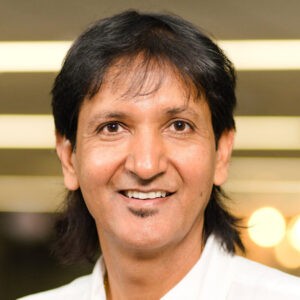
Dr Singh added a perspective from Lloyds Banking Group, a UK-regulated environment often considered one of the world’s most stringent. Simplification in such contexts is not merely a cultural initiative but a survival strategy. Excessive layers of approval add to time, effort, cost and ultimately organisational inertia. Breaking these cycles requires courage, clarity and the ability to slow down in order to speed up effectively.
AI, upskilling and the power of choice
As the conversation shifted to frontline productivity and technology’s impact, Axis Bank’s Relan offered a candid assessment of how AI is already reshaping workflows in banking. Whether in operations, retail processes or recovery mechanisms, the industry’s future lies in “workflow ecosystems” where humans and bots operate alongside each other. The central question for HR is not whether AI will replace jobs but how organisations will empower employees to remain relevant within these hybrid systems.
“AI will plant itself firmly in workflows. The only sustainable way forward is to equip people to evolve—and to let them choose how they want to shape their careers.”
Amit Relan, EVP-HR, Axis Bank

One of Axis Bank’s strongest responses has been “Thrive”, an internal mobility and career-development ecosystem that gives every employee transparent access to opportunities across the bank. But choice alone is not enough; capability must accompany aspiration. The bank is building a detailed skills taxonomy, enabling employees to understand what they need to learn to move into new roles. With learning platforms, structured capability-building and real-time skill-gap assessments, the organisation is scaling reskilling beyond sporadic interventions.
Relan’s message was clear: “AI will plant itself firmly in workflows. The only sustainable way forward is to equip people to evolve—and to let them choose how they want to shape their careers.”
Talent, terrain and public-sector realities
From AI-driven banking to the complexities of India’s power sector, NHPC’s Lal offered a contrasting perspective. Managing talent in hydroelectric projects—often located in remote, high-altitude, geopolitically sensitive zones—is a challenge far removed from corporate boardrooms. Employees operate in extreme environments, sometimes at high risk, with temperatures plunging to minus 20 degrees Celsius and oxygen levels dangerously low. The organisation’s people-strategy hinges on robust rotation policies, health safeguards and long-term workforce planning.
“Being a public-sector enterprise operating in border territories means facing intense pressure for local employment—demands that are genuine but often impossible to meet due to the technical nature of the work.”
Uttam Lal, director-HR, NHPC

“But the more difficult challenge,” Lal said, “lies in the social contract. Being a public-sector enterprise operating in border territories means facing intense pressure for local employment—demands that are genuine but often impossible to meet due to the technical nature of the work.” NHPC navigates this through negotiation, transparent policies and a strong focus on alternative livelihood creation through CSR initiatives.
Hard truths of economic downturns
DCM Shriram’s Girotra directed the conversation towards a principle often overshadowed in HR discourse: financial health is non-negotiable. Organisations are not social enterprises—if the balance sheet is weak, no amount of goodwill can protect jobs or fund CSR.
“For HR to be a credible partner in tough economic cycles, commercial literacy is not optional—it is a prerequisite.”
Sandeep Girotra, executive director and group CHRO, DCM Shriram

Drawing from global crises—from SARS to the 2008 financial meltdown to covid-19—Girotra shared an anecdote that left the room in reflective silence. During his tenure with GE Capital in Tokyo, he questioned why an organisation with vast assets needed to lay off 120 people. His manager replied: “I am trying to save the remaining 48,000.” The message was stark: tough decisions in downturns are made not to harm people but to protect the larger whole.
Girotra also pointed out a persistent skill gap in HR: many managers lack the financial understanding required to influence cost, drive strategy or justify programmes to chief executives. For HR to be a credible partner in tough economic cycles, commercial literacy is not optional—it is a prerequisite.
Leadership pipelines and resilience
As the conversation turned toward political, regulatory and geopolitical disruptions, the panel aligned on one theme—the future belongs to organisations that build deep, resilient leadership pipelines. Whether through mentoring, structured leadership academies or robust succession planning, investment in leaders who understand business, regulation and risk must continue at every level.
What stood out was not just the diversity of sectors represented but the striking convergence in leadership priorities. Organisations must anchor themselves in strong, lived culture rather than slogans. They must simplify decisions to accelerate execution. They must build financial and strategic acumen at all managerial levels. They must empower employees to reskill and grow, because capability—not headcount—creates agility. They must invest consistently in leadership. And above all, they must learn to stay resilient amid economic uncertainty, regulatory shifts and geopolitical volatility.
At PRISM–FIMC 2025, this conversation served as a timely reminder: leadership is not built in the absence of adversity; it is forged in how organisations confront disruption, transform through it and emerge with clarity and courage.