


Corporate purpose statements typically adorn office walls and disappear from actual practice. Companies declare commitment to values, then make decisions purely on financial metrics. Employees learn quickly that mission statements function as marketing rather than management philosophy.
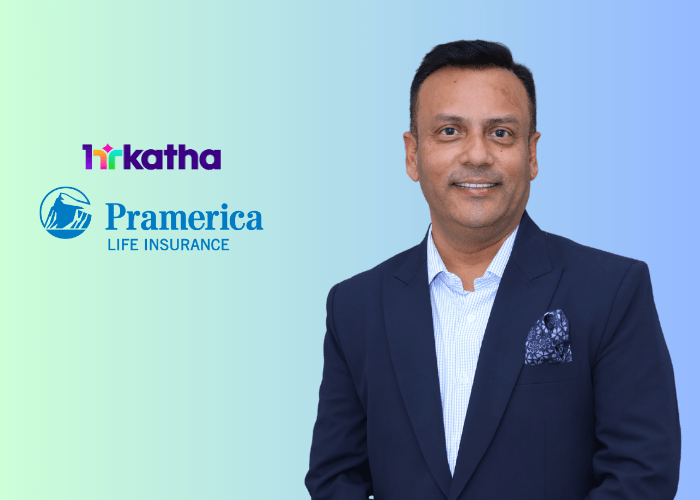
Pramerica Life Insurance, a joint venture between DIL, a wholly owned subsidiary of Piramal Finance Limited, and Prudential International Insurance Holdings, Ltd. (PIIH), a fully owned subsidiary of Prudential Financial, Inc. (PFI), position itself differently. “This company doesn’t put purpose on a wall. We live it every day,” says Sharad K Sharma, chief human resources and ethics officer. The firm maintains that purpose influences hiring, promotions, leadership behaviour, and daily decisions.
While Pramerica Life articulates a strong sense of purpose, the extent to which this is fully embedded into day-to-day operations is not entirely visible from an external standpoint. But the company’s approach—particularly around hiring for learning potential rather than current skills—offers insights into how organisations might adapt to rapidly changing technical requirements.
The skills obsolescence problem
Technical capabilities depreciate faster than ever. Programming languages, analytical tools, and industry-specific knowledge that seemed permanent five years ago now appear dated. This creates a fundamental hiring dilemma: recruit for today’s requirements and face obsolescence, or recruit for adaptability and invest heavily in training.
“This company doesn’t put purpose on a wall. We live it every day,”
Sharad K Sharma, chief human resources & ethics officer, Pramerica Life Insurance
Pramerica Life has chosen the latter. “We’ve moved from hiring for today’s skills to hiring for potential,” Sharma explains. “Technical capabilities can be taught quickly; what’s harder to build is curiosity, coachability and the ability to learn on the job.”
This philosophy sounds progressive, though it also provides convenient justification for hiring less expensive candidates lacking specific expertise. The philosophy reflects a progressive outlook and places value on learning agility. From the outside, however, it is not fully clear how consistently the organisation invests in developing this potential after hiring, or how much learning is expected to occur independently.
The use of psychometric assessments and competency-based interviews for senior roles indicates a structured approach to evaluating adaptability and growth orientation. As with most assessment tools, their effectiveness can vary, and they are best interpreted as part of a broader, holistic evaluation process.
Building the learning infrastructure
More substantively, Pramerica Life has developed what it describes as a robust learning ecosystem. Micro-learning sessions provide short, skill-focused content relevant to daily work. Role-based learning tracks and a digital academy aim to make development “visible and habitual.” The company reports growing learning management system adoption, suggesting employees actually engage with available training.
This infrastructure addresses the legitimate challenge of translating hiring-for-potential into actual capability development. Many organisations recruit adaptable people, then fail to provide structured learning, leaving employees frustrated and underutilised.
Pramerica Life’s Talent Review Process, internal job postings, and fast-track programmes theoretically create pathways for employees to reskill or move into business-critical roles. The Talent Review Process, internal job postings, and fast-track programmes appear designed to support talent mobility and reskilling. How broadly these opportunities are experienced across the workforce, however, is not entirely evident from an external perspective.
The company incorporates value-based conversations and employee referrals into its hiring process to strengthen cultural alignment. While this can enhance organisational cohesion, its broader impact on workforce diversity and perspectives is not fully clear externally. This approach sounds sensible but critics may argue that it unintentionally narrow diversity of thought if not balanced carefully.
Gender diversity beyond numbers
Pramerica Life launched SheShines in 2024, offering mentorship, health awareness, and leadership development specifically for women. The company reports that women now head strategic functions across finance, compliance, and sales—suggesting genuine progress beyond entry-level representation.
Sharma acknowledges that “systemic barriers such as societal conditioning and self-doubt do not dissolve overnight.” This recognition that cultural transformation requires sustained effort rather than single initiatives demonstrates more sophisticated thinking than companies claiming quick diversity wins.
More notably, Pramerica Life [highlights instances where it has opened roles traditionally associated with defence-sector professionals to diverse candidates], signalling an effort to broaden the definition of who qualifies for particular roles.
The company’s SOAR campus hiring programme brings in young professionals whose “fresh thinking challenges legacy assumptions”—corporate language that could mean genuine openness to different perspectives or simply youth-oriented recruitment marketing.
Psychological safety in hierarchical culture
Creating psychological safety—freedom to question authority without repercussions—proves particularly difficult in Indian corporate contexts where hierarchical structures remain culturally ingrained. Many organisations espouse openness whilst maintaining rigid power dynamics.
Pramerica Life has built multiple feedback mechanisms: quarterly CEO town halls connecting 3,000 employees, annual strategy meetings where leaders supposedly “challenge one another’s assumptions,” monthly CHRO sessions, and ‘Aap Ki Awaaz’ (Your Voice)—a direct feedback channel.
These platforms sound comprehensive, though their actual effectiveness depends entirely on leadership response. Do critical questions receive genuine consideration or polite acknowledgement followed by business as usual? Does feedback actually influence decisions, or do these forums function primarily as pressure-release valves creating the appearance of openness?
Sharma highlights that several organisational initiatives have emerged from employee inputs. Additional illustrations of these outcomes would further clarify the role employee feedback plays in shaping decisions.
The real test of psychological safety isn’t the existence of feedback mechanisms but whether employees who raise difficult questions face subtle career consequences. That’s nearly impossible to assess from outside.
Purpose as performance metric
Perhaps most notably, Pramerica Life emphasises evaluating employees not only on outcomes but also on the manner in which those outcomes are delivered. The company highlights individuals who demonstrate “empathy, integrity and commitment to going beyond transactional expectations” through its recognition platforms.
This approach addresses a legitimate problem: purely results-oriented evaluation can reward destructive behaviours that achieve short-term targets whilst damaging long-term culture. The organisation’s emphasis on evaluating both results and behaviours reflects a thoughtful approach to performance management. From an outside view, however, it is not entirely clear how this balance is maintained in practice, especially in more challenging performance scenarios.
The challenge with evaluating “purpose-driven behaviour” lies in measurement subjectivity. Unlike sales figures or project completion rates, assessing empathy or integrity involves considerable managerial judgment—potentially introducing bias whilst claiming to reward values.
The implementation question
Pramerica Life demonstrates a considered approach to contemporary talent challenges—such as purpose alignment, upskilling, diversity, and psychological safety. The organisation’s emphasis on evaluating both results and behaviours reflects a thoughtful approach to performance management.
Greater visibility into metrics such as learning outcomes, internal mobility, or diversity progress would help provide a fuller picture of the impact of these initiatives.
More fundamentally, purpose-driven organisations face a tension: remaining financially viable whilst prioritising values that sometimes conflict with profit maximisation. Insurance is a competitive, margin-sensitive business. Whether Pramerica Life’s humanity-as-competitive-advantage thesis survives sustained financial pressure will ultimately validate or disprove the approach.
Sharma’s assertion that “purpose is woven into the very fabric of how we operate” may prove true. But organisational fabric tears quickly under economic stress. The real test won’t be engagement scores during growth periods but whether purpose survives when tough decisions arrive.
For now, Pramerica Life demonstrates that Indian companies can articulate comprehensive people strategies addressing contemporary workforce challenges. Whether such strategies genuinely create more adaptive, engaged organisations—or primarily represent sophisticated HR communications—will become clear only through sustained execution and transparent reporting over years.