



Work-life balance was once a relatively simple idea: finish work, switch off and make time for life outside the office. Today, it has evolved into something far more elaborate. Employees are encouraged to set boundaries, use their leave, exercise, practise mindfulness, prioritise wellbeing and build healthier routines. Organisations, meanwhile, continue to add wellbeing programmes and flexibility initiatives to support these efforts.
But a paradox is emerging. When employees are constantly told to optimise their wellbeing and achieve better work-life balance, could balance itself start feeling like another performance expectation? And if employees are struggling to achieve it, where does the responsibility really lie: with the individual managing their time, with the manager shaping their experience or with the organisation designing the work in the first place?
Shantanu Jha, Group Chief Human Resources Officer, Jubilant Bhartia Group
Work-life balance should never become an individual KPI.
Work-life balance is a matter of balancing professional responsibilities with the time and space required for personal commitments. Turning it into another measure employees are expected to optimise defeats its purpose.

Organisations can encourage balance, but they cannot manufacture it through policies and programmes alone. What matters more is whether leadership behaviour reflects the message being communicated. If employees are told to switch off but are simultaneously expected to remain available at all times, the contradiction becomes difficult to ignore. The culture employees experience every day carries more weight than what is written in a wellbeing policy.
At the same time, responsibility for balance cannot be placed entirely at the organisation’s door. What enables one person to recharge may not work for another. Individuals need to understand what keeps them energised and fulfilled and create space for it.
Genuine balance, therefore, is not about maintaining an artificial 50:50 division between work and personal life. It is about meeting responsibilities on both fronts sustainably, while exercising judgement about where time and energy need to be invested.
Takeaway: Balance works best when organisations create the conditions for it, leaders model it through their behaviour and employees exercise judgement about how they manage their own priorities.
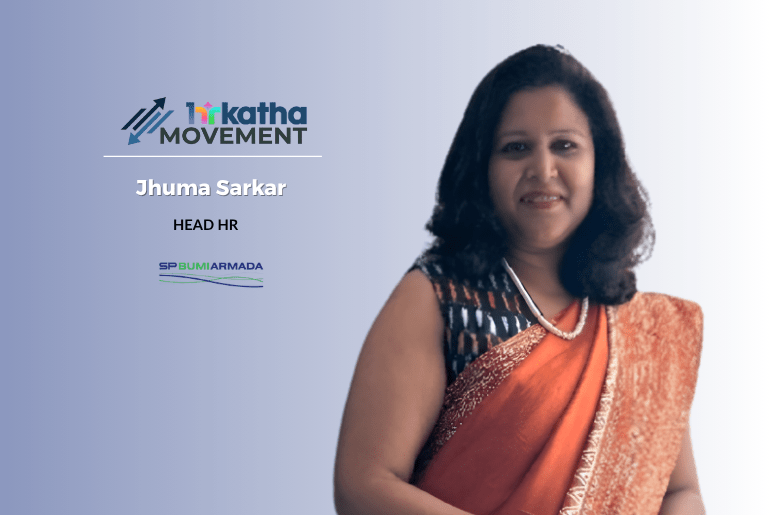
Jhuma Sarkar, Head – HR, Shapoorji Pallonji BUMI Armada JVCs
Balance is about managing time well, not simply having more of it.
The conventional definition of balance deserves to be questioned. Work-life balance has changed considerably, and sometimes work itself offers more structure and clarity than life outside it. Work can be demanding and deadline-driven, but knowing what needs to be done, prioritising tasks and taking ownership can create a genuine sense of control.
The challenge is not always the number of hours available, but also how those hours are managed. Work-life balance is a shared responsibility, and organisations should not treat it as another HR initiative or KRA. Policies can provide a framework, but culture determines whether those policies actually work.
Employees have a role too. Poor prioritisation, delayed tasks or an inability to delegate can add to pressure, both at work and at home. Balance can therefore depend not only on reducing demands but also on organising, prioritising, planning, delegating and communicating limitations clearly.
That does not mean every imbalance can be solved through better time management. Workloads and organisational expectations matter. But within the circumstances employees can influence, taking ownership of choices and responsibilities remains an important part of creating balance.
Takeaway: Balance is not necessarily about having fewer demands; it also depends on how effectively individuals prioritise, organise, delegate and communicate within the demands they can reasonably manage.
Chandrakala Kawle, Head – HR, Tachyon Technologies
Fix the work, not just the employee.
The conversation around wellbeing can sometimes place too much emphasis on employees actively achieving and optimising their own balance. But employees rarely struggle with balance simply because they have forgotten to take a break. More often, the problem lies in excessive workloads, competing priorities, unrealistic timelines or workplace cultures that reward constant availability.

Manageable workloads, realistic expectations, adequate support and managers who help teams prioritise can have a greater bearing on wellbeing than standalone wellness initiatives. An employee can practise mindfulness, set boundaries and manage time carefully, but none of those interventions can compensate indefinitely for work that is fundamentally unsustainable.
Organisations therefore need to focus less on wellbeing as an intervention and more on work design itself. Managers have a role in translating strategy into achievable plans, providing clarity and protecting teams from unnecessary complexity. Employees, meanwhile, need to set boundaries, manage their energy and speak up when support is required.
Both sides have a role to play. But if the conditions of work are creating the imbalance, asking employees to become better at managing their wellbeing risks treating the symptom while leaving the cause untouched. The starting point has to be the work itself.
Takeaway: Wellbeing cannot compensate for poor work design; sustainable balance begins with manageable workloads, realistic expectations, supportive managers and clarity around priorities.