
Close Menu
    Facebook X (Twitter) Instagram
    • Our Story
    • Partner with us
    • Reach Us
    • Career
    Subscribe Newsletter
    HR KathaHR Katha
    • Exclusive
      • Exclusive Features
      • Perspectives
      • Friday Features
      • herSTORY
      • Rising Stars
      • Case-In-Point
      • Point Of View
      • Research
      • HR Pops
      • Dialogue
      • Movement
      • Profile
      • Beyond Work
      • By Invitation
    • Brief News
      • Global HR News
      • Compensation & Benefits
      • Diversity
      • Events
      • Gen Y
      • Hiring & Firing
      • HR & Labour Laws
      • Learning & Development
      • Merger & Acquisition
      • Performance Management & Productivity
      • Talent Management
      • Tools & Technology
      • Work-Life Balance
    • Special
      • Editorial
      • HR Forecast 2026
      • Cover Story
      • HR Forecast 2024
      • HR Forecast 2023
      • HR Forecast 2022
      • HR Forecast 2021
      • HR Forecast 2020
      • HR Forecast 2019
      • New Age Learning
      • Coaching and Training
      • Learn-Engage-Transform
    • Studio
      • The CHRO Playbook
      • Quick HR Insights
      • The Corner Office
    • Reports
      • Whitepaper
        • HR Forecast 2024 e-mag
        • Future-proofing Manufacturing Through Digital Transformation
        • Employee Healthcare & Wellness Benefits: A Guide for Indian MSMEs
        • Build a Future Ready Organisation For The Road Ahead
        • Employee Experience Strategy
        • HRKatha 2019 Forecast
        • Decoding and Driving Employee Engagement
        • One Platform, Infinite Possibilities
      • Survey Reports
        • Happiness at Work
        • Upskilling for Jobs of the Future
        • The Labour Code 2020
    • Forums
      • HRKatha Inner Circle
      • HRKatha Futurecast
      • Leadership Summit 2025
      • Rising Star Leadership Awards
      • HRKatha Futurecast 2025
      • Automation.NXT
      • The Great HR Debate
    WhatsApp LinkedIn X (Twitter) Facebook Instagram
    HR KathaHR Katha
    Home»Exclusive Features»Perspectives»HR Perspectives by Prabir Jha: “Psychological safety is talked about more from the pulpit than practised in the trenches”
    Perspectives

    HR Perspectives by Prabir Jha: “Psychological safety is talked about more from the pulpit than practised in the trenches”

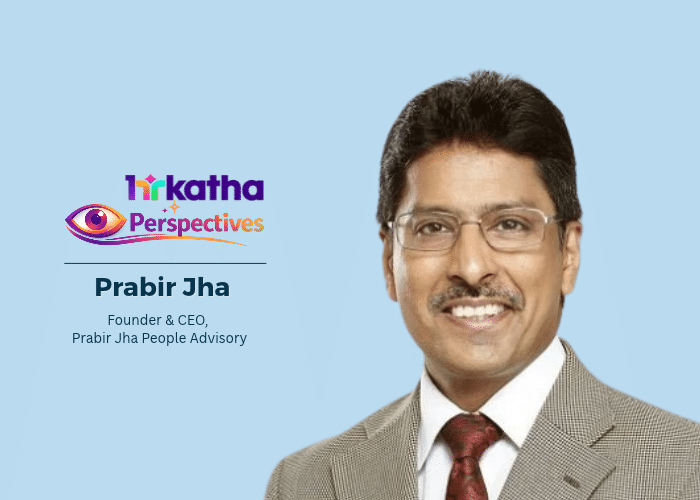
    Prabir Jha, founder and CEO of Prabir Jha People Advisory, on why psychological safety must influence promotions and rewards, why organisations need subcultures rather than uniformity, and why companies often blame compensation for attrition instead of confronting poor management
    mmBy Radhika Sharma | HRKathaOctober 21, 20265 Mins Read345 Views
    Share LinkedIn Twitter Facebook WhatsApp
    Prabir Jha
    Share
    LinkedIn Twitter Facebook WhatsApp

    Organisations have become increasingly fluent in the language of culture, inclusion and psychological safety. Whether that language has changed how people experience their workplaces is a different question. Employees are encouraged to speak up, yet hierarchical behaviour persists. Companies celebrate diversity, yet leadership teams often emerge from remarkably similar backgrounds. And when good people leave, the explanation frequently returns to compensation rather than the quality of management.

    Prabir Jha has spent more than three decades in people leadership across Tata Motors, Reliance Industries, Dr Reddy’s Laboratories and Cipla before moving into advisory work. That experience has left him sceptical of HR practices that are more visible in policy than in behaviour. In conversation with HRKatha, he argues for greater individual choice within organisational cultures, more outside perspectives in senior leadership, and a definition of inclusion that goes beyond demographic representation.


    Practised in the trenches, not preached from the pulpit

    Organisations speak increasingly about psychological safety, yet many workplaces remain hierarchical. What prevents the idea from becoming part of everyday leadership behaviour?

    Unfortunately, this is talked about more from the pulpit than it is practised in the trenches.

    A lot of it has to do with leaders’ own experiences and how they built their careers. They feel that is the only way people can be led. As a result, cultures remain hierarchical, tenure-based and influenced by proximity to the top.

    Nothing is more important than a conscious shift in role-modelling from the top, accompanied by a clear articulation that behaviour must change down the line.

    That change must then be rewarded or reprimanded very clearly through straight feedback. Promotions, bonuses and recognition must all visibly represent the new philosophy.

    Simply talking about psychological safety in town halls is unlikely to change much.

    “Truly diverse companies cannot be built around token, demographic-anchored affirmative action.”


    One culture is not enough

    Organisations often try to create a common culture across the workforce. With employees seeking different things from work, does that pursuit of uniformity risk becoming counterproductive?

    Culture must be atomised to personal drivers and preferences.

    Whether we admit it or not, subcultures do and must exist within any overarching organisational culture. Organisations need to build flexibility and offer more choice. They need to stop being obsessed with compliance and policies and become much more practice-rich.

    Decision rights must be pushed dramatically further down the line. Organisations need to empower people aggressively and, at the same time, hold each other accountable. These are the things that build ownership and trust.

    “At least 25 per cent of senior leadership should have less than five years of tenure. That is the only way to bring in a blinker-free, outside-in perspective.”


    The reason nobody names

    When capable employees leave, compensation is often cited as the explanation. Are organisations sometimes reluctant to acknowledge the management failures behind attrition?

    People typically leave because of poor managers. Low appreciation, toxic behaviour and no conscious effort to expose them to new learning or visibility are the real drivers.

    Companies often find it difficult to acknowledge this dark underbelly because the issue can ultimately reflect poorly even on senior leadership. So it becomes convenient for everyone to blame attrition on better prospects.

    “People leave because of poor managers. Companies blame compensation because the real reason reflects poorly on senior leadership.”


    Build the bench, keep the window open

    Internal leadership development builds continuity, but can it also make organisations too inward-looking? How much external talent is necessary to challenge established thinking?

    I believe at least 25 per cent of senior leadership should have less than five years of tenure in any organisation. That is the only way to bring in a blinker-free, outside-in perspective. It keeps the culture evolving and the system agile.

    At the same time, growing plenty of internal talent builds organisational stability, reinforces pride and creates a strong career story, all of which contribute to a good employer brand.

    The answer is not to choose between building and buying. Organisations need enough external talent to challenge established thinking while continuing to develop a strong internal leadership bench.

     “Culture must be atomised to personal drivers and preferences. Subcultures do and must exist within any overarching organisational culture.”


    Pluralism over checkboxes

    You have been critical of conventional diversity approaches. What do you believe organisations are getting wrong, and how would your idea of pluralism produce a genuinely different leadership team?

    The entire diversity conversation has become derailed. It has become a convenient political hijack for some.

    Truly diverse companies cannot be built around token, demographic-anchored affirmative action. Over time, that can foster mediocrity rather than merit and, in turn, fracture organisational cohesiveness.

    What I have always advocated is building pluralism, in thinking and in doing. This means hiring or promoting beyond the usual parameters: the same industry, same background, age, gender and so on.

    It must be about inviting and supporting divergent viewpoints, encouraging debate and building greater innovation and ideation into the culture.

    This is a much deeper effort than the perfunctory checkbox metrics that many companies follow.

    “Psychological safety is talked about more from the pulpit than it is practised in the trenches.”

    CHRO Culture diversity Employee Employee Benefits Employee Engagement employees employer Employment Engagement HR HR Perspectives Human Resources LEAD Prabir Jha Productivity psychological safety Recruitment Skill Development Training Workforce Workplace
    Share. LinkedIn Twitter Facebook WhatsApp
    mm
    Radhika Sharma | HRKatha

    Radhika is a commerce graduate with a curious mind and an adaptable spirit. A quick learner by nature, she thrives on exploring new ideas and embracing challenges. When she’s not chasing the latest news or trends, you’ll likely find her lost in a book or discovering a new favourite at her go-to Asian eatery. She also have a soft spot for Asian dramas—they’re her perfect escape after a busy day.

    Leave A Reply Cancel Reply

    Related Posts

    India’s tech professionals have already decided before you call them

    October 21, 2026

    PayU gets Megha Mahesh as director-talent and culture

    October 21, 2026

    NatWest increases office attendance requirements for 30,000 employees

    October 21, 2026

    Qualcomm is gearing for job cuts  

    October 21, 2026
    zoha
    Editorial

    Can India become a skills-first economy while remaining a collar-conscious society?

    Consider two employees beginning their careers. One joins a technology company as a junior analyst.…

    HR’s credibility is tested after the complaint is filed

    The video of what appears to be a meeting between employees and Genpact’s employee relations…

    EDITOR'S PICKS

    India’s tech professionals have already decided before you call them

    October 21, 2026

    HR Perspectives by Prabir Jha: “Psychological safety is talked about more from the pulpit than practised in the trenches”

    October 21, 2026

    POV: Are annual performance reviews still relevant in the age of continuous feedback?

    October 19, 2026

    Can India become a skills-first economy while remaining a collar-conscious society?

    October 18, 2026
    Latest Post

    India’s tech professionals have already decided before you call them

    Research October 21, 2026

    The careers page was designed to present an employer on its own terms. But candidates…

    HR Perspectives by Prabir Jha: “Psychological safety is talked about more from the pulpit than practised in the trenches”

    Perspectives October 21, 2026

    Organisations have become increasingly fluent in the language of culture, inclusion and psychological safety. Whether…

    PayU gets Megha Mahesh as director-talent and culture

    Movement October 21, 2026

    Megha Mahesh has joined PayU as director-talent and culture after spending over two years as…

    NatWest increases office attendance requirements for 30,000 employees

    Brief News October 21, 2026

    NatWest has ordered around 30,000 employees to spend more time in the office, reversing parts…

    Asia's No.1 HR Platform

    Facebook X (Twitter) Instagram LinkedIn WhatsApp Bluesky
    • Our Story
    • Partner with us
    • Career
    • Reach Us
    • Exclusive Features
    • Cover Story
    • Editorial
    • Dive into the Future of Work: Download HRForecast 2024 Now!
    © 2026 HRKatha.com
    • Disclaimer
    • Refunds & Cancellation Policy
    • Terms of Service

    Type above and press Enter to search. Press Esc to cancel.