



HR has no shortage of frameworks, policies or practices to borrow from other organisations. A performance-management system that succeeds in one company can be introduced in another. So can a leadership-development programme, a talent-assessment model or a new approach to employee engagement. What is less easily transferred is the understanding of people and organisational context that made those practices work in the first place.
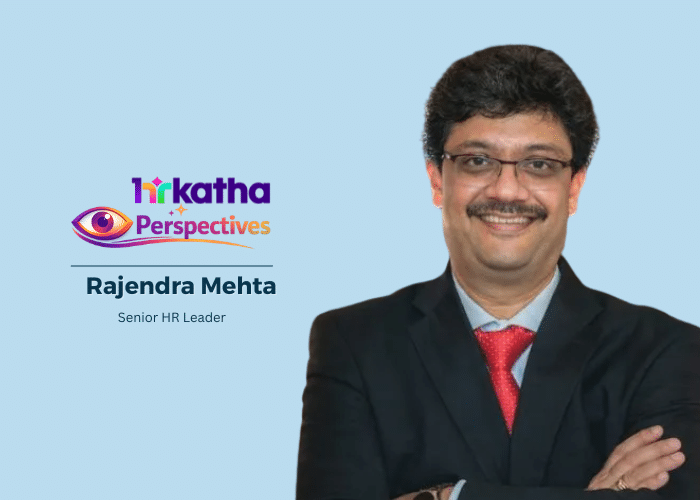
For Rajendra Mehta, who has spent decades in people leadership across industries, this is a fundamental distinction. HR professionals need to understand why a practice works before deciding whether it belongs in their own organisation. That requires more than technical knowledge. It calls for an understanding of human behaviour, the way organisations operate and the conditions under which individuals can contribute effectively.
In conversation with HRKatha, Mehta explains why strategic misalignment can drive capable people away, why behavioural compatibility matters alongside skills, and why organisations need both the institutional knowledge of long-serving leaders and the fresh perspectives of external hires.
Philosophy before practice
HR professionals have access to more frameworks and established practices than ever before. What do they risk overlooking when they adopt these approaches without first understanding the people and context they are meant to serve?
Many HR professionals approach situations through purely logical responses, which may not always be the right way forward.
HR professionals must understand the philosophy behind every practice they introduce. There needs to be philosophical clarity about human behaviour before policies and practices are designed. Simply assuming that a practice that worked in another organisation will also be relevant to one’s own is not a sound basis for HR work.
The right foundation is a deep understanding of how people actually behave and then translating that understanding into practical, implementable practices that help deliver business results.
HR professionals need to understand what businesses require: making employees more effective and productive, helping people thrive, supporting growth and enabling talent to become a competitive advantage.
Processes and systems matter, but they need to be built in a way that enables people to drive organisational outcomes rather than constraining them.
HR cannot operate through logic alone or simply replicate policies and practices that other organisations have implemented. What works in one context may not be relevant to another.
That is why understanding human behaviour, not just HR frameworks, is fundamental to building a successful career in this field.
“The choice is not between building and buying leadership. It is about maintaining both deliberately.”
The reasons organisations rarely acknowledge
Compensation is often cited when capable employees leave. How frequently is the deeper problem that they no longer feel able to contribute in the way they believe they should?
People often leave because they are not strategically or culturally aligned with the way the organisation thinks or collectively approaches its future.
When individuals put forward their ideas and perspectives, they expect them to be considered and, where relevant, acted upon.
When this misalignment becomes recurring, when a leader consistently finds that their thinking does not connect with the organisation’s direction, they eventually conclude that they are unable to make the kind of contribution their capabilities would allow elsewhere.
Another reason is conflict between leaders. Such conflicts can arise when two or more individuals have similar ambitions, even if neither openly acknowledges that their aspirations are competing.
When organisations fail to surface and address these dynamics, people leave rather than continue working around them.
Ultimately, an individual’s objective is to contribute. When their ability to make that contribution is undermined by organisational dynamics, they will seek opportunities where they feel naturally positioned to succeed.
“Leaders need to leverage younger employees’ perspectives rather than risk losing talent by excluding them from meaningful decisions.”
Skills and the behaviour behind them
Organisations increasingly prioritise adaptability and learning agility. But can someone possess the right skills and still struggle because their natural way of working does not fit the organisation?
Skills are acquirable. What organisations need to do is embed skill development and continuous learning into everyday ways of working rather than taking people into classrooms with the expectation that their behaviour will subsequently change.
If AI can make certain processes more effective, its application needs to become part of the enterprise system itself. That is how employees improve their capabilities at the pace the business actually requires.
But the challenge is not limited to what an individual is expected to deliver. It is equally important to understand how they deliver it.
An individual’s behavioural traits may not be suited to the way a particular organisation operates.
Some organisations require a more direct and assertive approach to delivering results. Others reward a more cohesive and collaborative style. Neither is inherently better, but the mismatch between an individual’s natural approach and the organisation’s operating context can quietly undermine performance on both sides.
Skills and behavioural compatibility need to be assessed together. One without the other gives an incomplete picture of whether someone can succeed within a specific organisation and contribute to its growth.
“Skills are acquirable. What matters is whether an individual’s behavioural approach to delivering results is compatible with the environment they are working in.”
The generation that performs exceptionally well
You describe younger employees as exceptionally capable. What are organisations failing to recognise about how this generation thinks and contributes?
The younger generation thinks differently and approaches things differently. They also perform exceptionally well, partly because of the access to shared information that previous generations did not have.
What matters is an organisation’s ability to recognise the sharpness of their perspectives.
Leaders need to leverage those perspectives rather than risk losing young talent by excluding them from meaningful decisions and important projects.
Delivering extraordinary outcomes requires collective effort. That can happen only when leaders give younger employees the space, flexibility and opportunities to operate in ways that bring out their strengths.
The mistake is treating generational difference as a management problem rather than as a source of capability the organisation has not yet learned to use.
“An individual’s objective is to contribute. When their ability to make that contribution is undermined by organisational dynamics, they will seek opportunities elsewhere.”
Build the bench, keep the window open
Long-serving leaders bring institutional knowledge, while external hires can challenge established thinking. How should organisations preserve the advantages of both without becoming dependent on either?
Organisations need both.
Long-tenured internal leaders understand the culture, the internal dynamics and how to navigate the systems and influence networks that make execution actually happen. That knowledge accelerates delivery in ways that external hires take time to acquire.
But leaders who have been inside an organisation for a long time can also become constrained by the belief that things have always been done in a particular way.
External leaders challenge those assumptions. They bring perspectives that question what has become familiar and encourage organisations to explore possibilities they would not otherwise consider. That diversity of thought is valuable.
Developing internal talent also reduces the premium organisations pay when hiring senior professionals from outside.
These individuals can be developed across multiple business functions because they already understand the organisational context. The key is nurturing them in a way that helps them overcome their limitations and think beyond existing boundaries rather than simply reinforcing what they already know.
The choice is not between building and buying. It is about maintaining both deliberately.
“HR cannot operate through logic alone or simply replicate practices that other organisations have implemented. What works in one context may not be relevant to another.”