



Company: EquiBank (fictitious), one of India’s top private banks with 45,000 employees.
Background:
EquiBank is under pressure—from regulators, investors, and internal employee resource groups—to improve its gender diversity numbers. Currently, only 8 per cent of leadership roles (VP and above) are held by women, well below the industry average of 18 per cent. The Board has made it clear: “This has to change.”
But clarity on the goal has not produced clarity on the path.
The Situation:
A Senior Vice President role has opened in Retail Banking Operations—a critical position overseeing 2,000+ employees and Rs500 crore in annual transactions. It is the kind of role that shapes careers, defines leadership pipelines, and sends signals across the organisation about what the bank truly values.
The Candidates:
Meera Iyer is currently a manager in retail operations. She is sharp, respected by her team, and has shown strong leadership instincts. During COVID-19, she successfully led the digital onboarding transformation, which improved customer satisfaction scores by 40 per cent. Her execution was flawless. Her stakeholder management was deft.
But she has never managed a team larger than 150 people. This role requires managing multiple regional teams, navigating regulatory complexity, and crisis management at scale—experience she simply has not had yet.
Rahul Khanna is currently a VP in corporate banking operations. He has led multiple large-scale operations, managed teams of 1,500+, and has proven crisis-management skills. Two years ago, when a cyberattack hit one of the branches, Rahul’s swift containment saved the bank from a potential Rs50 crore loss. He is the safer bet for immediate performance.
But promoting him means the gender gap widens further—and the signal to every woman in the bank is unmistakable: “We talk about diversity, but when it matters, we pick the man.”
The Dilemma:
Should HR back Meera as part of the DEI commitment—accepting a learning curve and investing in her growth? Or go with Rahul, the operationally safer choice, even if it damages the bank’s DEI credibility and demoralises high-potential women across the organisation?
What’s really at stake:
This is not just about filling one role. It is about whether “meritocracy” means “proven track record” or “proven potential”—and whether the bank is serious about building a pipeline of women leaders, or just managing optics.
Every woman watching this decision will draw conclusions about whether ambition is rewarded or whether the glass ceiling is simply rebranded as “readiness gaps.”
What HR leaders said:
Shaleen Manik, CHRO, Transsion India

“This happens more often than companies admit. Organisations default to ‘merit’ but define it almost entirely by past performance—which is backward-looking and biased against women who’ve historically been given smaller roles.
Real meritocracy assesses future readiness and potential, not just what someone has already done. If you only look backwards, you keep promoting the same profile of leaders—and diversity stays stagnant.
Building future leaders must be viewed as an investment, not a risk. Even if Meera is 70 per cent ready, a structured transition plan—90-day roadmap, targeted KPIs, mentorship—can help her succeed without compromising business continuity.
To balance both needs, appoint the experienced leader if the role is mission-critical, but place a strong woman successor as second-in-command to shadow, learn, and eventually step up. That’s how you build sustainable DEI at the top.”
Tanaya Mishra, G-CHRO, InSolutions Global

“DEI was originally corrective. Over time, many organisations felt meritocracy was being sidelined and returned to a more ‘gender-agnostic’ approach where capability drives decisions.
The answer depends on the organisation’s maturity and its second line of leadership. If the company has a strong bench, the risk of placing Meera is manageable—the second line can absorb pressures whilst she grows. In that scenario, promoting her is absolutely feasible.
But if the organisation lacks depth or is under significant pressure, it’s better not to take a risk that could destabilise critical functions. Businesses run on P&L outcomes and compliance.
Without a strong backup structure, the safer choice becomes necessary—not because of bias, but because the business can’t afford failure.
DEI decisions can’t be divorced from business realities. Assess structural readiness before taking bold steps, or the decision may backfire.”
Ramesh Shankar, senior HR Leader
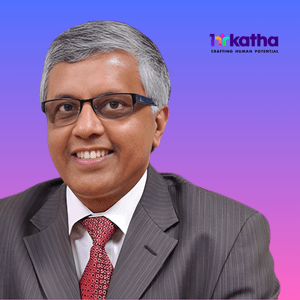
“The framing of ‘DEI vs meritocracy’ is flawed. Merit is redefined when opportunities are equalised. What organisations call ‘merit’ is often just accumulated experience—itself a product of historic biases and access.
Potential is as much a part of merit as performance history. Women like Meera are penalised simply because the system never gave them larger teams in the first place.
Leaders must distinguish between performance risk—someone fundamentally incapable—and opportunity risk—someone untested. Meera is opportunity risk, precisely where organisations must intervene to break the cycle.
Give Meera the role with a strong transition plan, mentoring, and reviews—not as charity, but as correction to systemic disadvantage. If organisations always choose the ‘safer’ candidate, their DEI ambitions will remain rhetoric.
“The real test of commitment is choosing potential over comfort, and equity over inertia.”
Your Turn: What would you do? Share your response in the comment box or share on LinkedIn with #HRKathaCaseInPoint