



Women comprise approximately 19.7 per cent of workers in India’s formal manufacturing industries, a figure largely unchanged for two decades. Heavy industries such as automotive and machinery employ women at just 4-5 per cent. Electronics manufacturing fares better given less physically demanding work, though gender balance remains elusive.
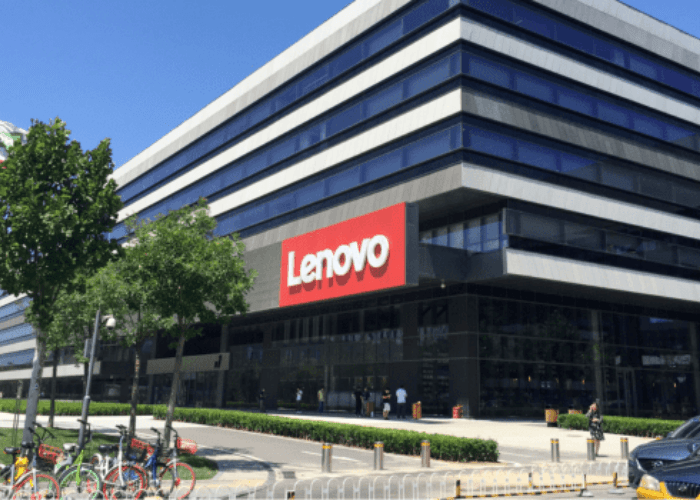
Till the end of March 2025, Lenovo India’s electronics facilities employed 35 per cent women on the shop floor—far above the national average. In FY24/25, women made up 27 per cent of the company’s workforce across India and 16 per cent of leadership roles, just behind Lenovo’s global average of 25 per cent. These numbers, however, did not materialise from diversity pledges alone. These numbers didn’t emerge from diversity pledges but from what Priya Tikare, director and head-HR, Lenovo India, describes as a decade of work addressing “cultural, structural and environmental barriers.”

Whether Lenovo’s approach offers a replicable model or reflects advantages specific to electronics assembly and substantial resources is worth examining.
Three different challenges
Lenovo India operates fundamentally different workplaces: manufacturing plants, sales offices, and global capability centres. Plants faced what Tikare calls “historically male dominated” environments with “limited female pipelines” and “infrastructure not really designed for gender balance.”
“What sets Lenovo apart is the recognition that good intentions alone don’t lead to equitable outcomes. Our commitment to inclusion isn’t recent — it’s the result of over a decade of consistently embedding inclusion into the very fabric of our business strategy.”
Priya Tikare, director & head-HR, Lenovo India
Corporate offices confronted subtler challenges. Policies existed, supportive managers were present, but ensuring “consistent, unbiased interviewing, hiring, and day-to-day decision-making” required systematic intervention.
This honest assessment—acknowledging good intentions don’t automatically produce equitable outcomes—distinguishes Lenovo’s approach. Tikare emphasises that Lenovo has worked on this “not just in the past few years, but at least a decade,” integrating inclusion into business strategy.
Building the pipeline
Lenovo’s strategy operates on two levels. Through CSR partnerships, over 3,500 women have been trained in programmes like Campus to Industrial Careers, positioning technology and industrial roles as viable careers—challenging assumptions that manufacturing suits only men.
Internally, hiring practices were redesigned. The company uses what Tikare calls “gender-fair AI tools” and restructured interview processes to reduce bias, particularly for technical and manufacturing roles.
More tangibly, Lenovo invested in physical infrastructure and support policies: childcare and crèche facilities, maternity and paternity leave, flexible arrangements, and work-from-home options. Regular accessibility audits ensure facilities remain inclusive.
Tikare stresses that representation requires responsibility—”ensuring safety, training managers well, providing the right infrastructure, and strengthening supporting policies.”
This recognition that hiring women into unprepared environments creates problems demonstrates sophisticated thinking beyond simple targets.
Career mobility systems
Lenovo introduced RISE UP, encouraging employees to explore opportunities across business units and regions. The Talent Card functions as an internal résumé, updated by employees and accessible to managers worldwide for identifying internal talent.
The 70-20-10 Individual Development Plan model supports personalised growth: 70 per cent through experience, 20 per cent through mentoring, 10 per cent through formal training.
These tools address a common inclusion challenge: women often lack visibility for advancement. When promotion decisions happen through informal networks, bias easily creeps in. Systematising visibility theoretically levels the playing field.
Lenovo points to women who progressed from India-based roles to global positions, from individual contributors to leaders. Such success stories are encouraging but don’t necessarily demonstrate systematic accessibility.
Measurement and metrics
Lenovo tracks representation through dashboards, monitors hiring percentages at various organisational levels, and reviews retention and attrition data. The annual Lenovo Listens survey includes a dedicated diversity and inclusion dimension.
Metrics till March 2025 show women comprising 35 per cent of shop floor workers, 24 per cent of technical roles, and 27 per cent of overall inclusion hiring. For Lenovo, measurement acts as a safeguard against performative diversity. Tikare insists that “metrics keep us real and honest”—recognition that without measurement, inclusion efforts easily become performative.
LGBTQ+ inclusion
Lenovo’s Pride Employee Resource Group has evolved significantly. The company signed the Declaration of Amsterdam, offers same-sex partner health coverage, and enables gender self-identification.
The Pride Survey 2024 reports 90 per cent supporting LGBTQ+ allyship, 94.5 per cent feeling safe challenging discrimination, and 92.9 per cent observing visible leadership commitment.
Though survey design and response bias can influence such results, the ERG has influenced policies including gender self-identification and inclusive health coverage—suggesting actual influence rather than symbolic representation.
Context matters
Lenovo’s 35 per cent women in manufacturing exceeds India’s 19.7 per cent national average significantly. However, context is crucial. Electronics assembly proves more amenable to gender balance than heavy manufacturing—work requires less physical strength, involves precision assembly, and occurs in cleaner environments than foundries or machinery plants.
The question isn’t whether Lenovo’s approach could work in steel mills—different physical demands require different solutions—but whether other electronics and light manufacturing firms could replicate these results. Lenovo’s resources as a global technology company enable investments smaller manufacturers cannot afford.
Tikare’s emphasis on persistence rather than quick fixes reflects realistic understanding of cultural transformation’s difficulty. Yet questions remain about scalability and sustainability. Can Lenovo maintain these levels whilst scaling operations? Would inclusion survive economic pressures requiring cost reduction?
For now, Lenovo demonstrates that electronics manufacturing inclusion can significantly exceed India’s overall manufacturing performance when organisations commit resources, time, and systematic intervention over years. The 35 per cent figure, whilst impressive, reflects advantages specific to electronics assembly rather than offering direct comparison to traditional heavy manufacturing. Whether this represents a replicable model for light manufacturing or a resource-intensive approach few can match remains an open question.