


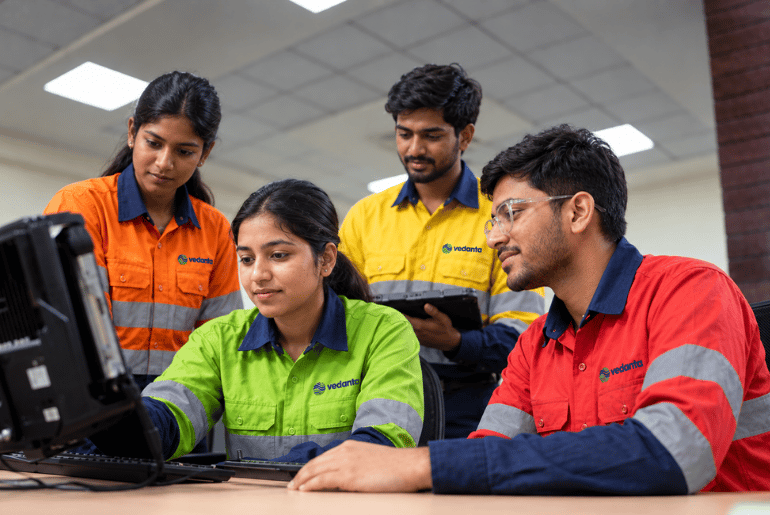
Engineers account for 42 per cent of Vedanta Group’s workforce, with the conglomerate employing technical talent across traditional engineering disciplines as well as emerging areas such as artificial intelligence, data science, renewable energy and robotics.
The group highlighted its engineering workforce on National Engineers’ Day, noting that its talent base spans electronics, chemical, petroleum, electrical, metallurgical, mining and thermal engineering, alongside newer specialisations in environment, design, AI, data science and automation.
Vedanta hires engineering talent from institutions including IITs, NITs and private universities, as well as experienced professionals with specialised expertise. The company’s development approach includes structured learning programmes, cross-functional assignments, mentorship and frontline exposure to industrial operations.
The engineers work across the group’s mining, metals, oil and gas, power and mineral processing operations, with roles covering areas such as process optimisation, productivity, safety, reliability, automation and resource efficiency.
The company is also using internal mobility to provide engineers with opportunities to move across businesses and functions, allowing them to gain exposure to different industrial environments and build capabilities beyond their core specialisations.
Engineering teams across Vedanta’s businesses are increasingly working with digital and emerging technologies alongside conventional industrial systems. At Hindustan Zinc, engineers work across underground mining and smelting operations, while Vedanta Aluminium’s teams work across mining, refining and aluminium production, including areas such as automation and energy efficiency.
In the oil and gas business, petroleum and mechanical engineers are involved in exploration, production and asset management, with technologies such as digital twins and predictive maintenance being used across operations. Engineers at Vedanta Power work across power generation, control and instrumentation and plant reliability.
The group said its engineering talent requirements are also evolving as it expands its focus on areas such as digitalisation, AI, sustainability, advanced manufacturing, critical minerals and energy.
The emphasis on both core engineering expertise and emerging skills reflects the changing requirements of large industrial operations, where engineers are increasingly expected to work across technology, automation, sustainability and operational functions.
