


Company: NovaTrac Infrastructure (fictitious), a mid-sized infrastructure services company with 2,800 employees, delivering project management, operations and maintenance services across power, transport and urban infrastructure projects in India.
Background
For six months, NovaTrac Infrastructure has been quietly losing some of its best people.
Twelve high performers have resigned during this period. Most had strong performance records, no disciplinary history and no formal complaints against their managers. Their exit interviews were equally unremarkable. Employees cited better opportunities, career growth and personal reasons.
On the surface, nothing appeared unusual.
Engagement survey scores remained stable. No grievance cases had been raised. Managers continued to meet their targets. The organisation’s overall people metrics suggested business as usual.
But a closer look at attrition revealed something else.
A disproportionate number of exits were concentrated in a few teams. Several departing employees had reported into the same layer of middle management.
Then HR noticed another possible warning sign.
A cluster of anonymous Glassdoor reviews mentioned toxic middle management, favouritism, excessive pressure and poor manager behaviour. The reviews named no individuals, and HR could not establish whether the allegations were accurate. But some of the themes appeared consistent with the teams experiencing the highest attrition.
HR was now confronting an uncomfortable possibility.
Were employees leaving without telling the organisation what was really driving them out? Or was HR connecting unrelated signals and reading too much into them?
The dilemma
Should HR treat the attrition pattern and Glassdoor reviews as sufficient grounds for a formal investigation, even without complaints or independently verified allegations?
Or should it wait for stronger evidence before scrutinising particular teams and managers, recognising that anonymous reviews and unexplained resignations can create unfair suspicion?
And if neither approach feels right, is there a third path: use the emerging patterns to initiate structured listening through skip-level conversations, stay interviews and small-group discussions, without presuming misconduct or targeting individual managers?
What’s really at stake
This is a question about how organisations recognise problems that employees may be unwilling to report.
NovaTrac has not neglected employee feedback. It conducts engagement surveys and exit interviews, and has HR business partners embedded in the business. The formal listening mechanisms exist.
Yet none has explained why twelve high performers have left in six months, particularly when departures are concentrated in a few teams.
That does not automatically establish a trust problem. Employees leave for many reasons, and they are not obliged to disclose every consideration behind a resignation. Better opportunities, compensation, career stagnation and personal circumstances can all be genuine explanations.
But the pattern deserves attention.
If employees believe that raising concerns about managers could damage their careers or achieve little, they may choose silence over confrontation. Exit interviews can then become formalities, while engagement surveys offer reassurance that does not reflect the experience of everyone in the organisation.
The difficulty is distinguishing that possibility from other explanations.
The Glassdoor reviews add another layer of uncertainty. Anonymous allegations cannot be treated as established facts, particularly when managers’ reputations are at stake. Nor should they be dismissed simply because the organisation cannot identify who wrote them.
HR therefore faces two risks. Acting too aggressively could unfairly implicate managers on the basis of incomplete evidence. Doing nothing could allow a genuine problem to continue until more employees leave.
There is also a question about the reliability of conventional people metrics. Stable engagement scores and the absence of grievances may indicate a healthy environment.
Equally, they may conceal problems within particular teams that organisation-wide averages fail to capture.
The challenge is not simply to collect more feedback. It is to understand whether existing channels are revealing what employees actually experience, and whether the organisation is prepared to act when those experiences are uncomfortable to hear.
The deeper question is this: when the data suggests something may be wrong but employees are not saying so directly, how far should HR go in searching for the truth?
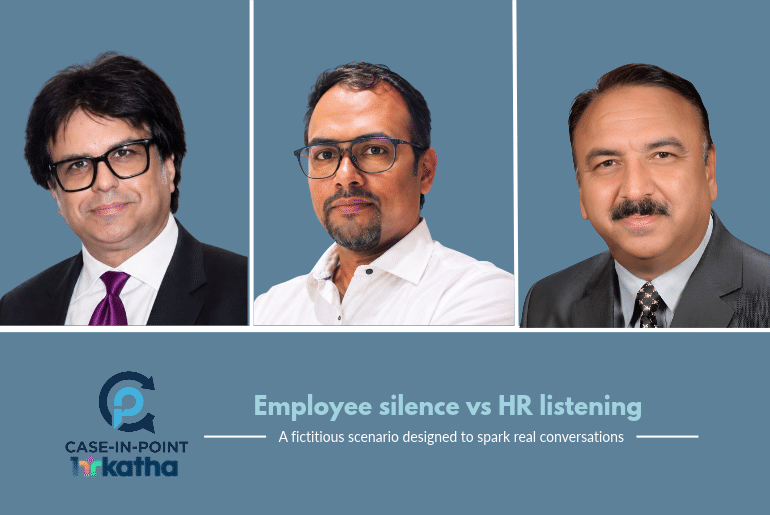
We asked three HR leaders how they would approach this dilemma.
What HR leaders said
Aditya Sareen, senior HR leader
“Resignation is an outcome, not always the cause. Twelve high performers leaving within six months is a signal for organisational introspection. As a CHRO, my first question would be: what are we not hearing?
Silence in an organisation can reflect low psychological safety, lost trust or simply better opportunities elsewhere. But when the silence is concentrated in specific teams and management layers, it deserves more than a routine review.
Employee listening must go beyond surveys and exit interviews. It needs to include pulse checks, open conversations, skip-connects, one-to-ones and anonymous channels. Alumni can also offer a candour that current employees sometimes cannot.
I would treat the Glassdoor reviews as a signal, not as evidence, and triangulate them with attrition patterns, engagement data, mobility trends, absenteeism, rewards, succession risk and confidential conversations with people still in the organisation.
The responsibility is to listen without prejudice, validate without assumption, diagnose without blame and intervene early. The best time to address a toxic environment is when the weak signals first appear, not after the good people have already left.
The real measure of an organisation’s listening culture is whether employees genuinely believe that speaking up will make a difference. Sometimes the most powerful feedback is not a complaint. It is a resignation.”
Savio D’Souza, chief people officer, Chartered Speed
“The situation at NovaTrac is a classic example of the silence that can precede an organisational crisis. When high performers resign with vague reasons and exit interviews yield little actionable insight, HR may be facing a breakdown in trust rather than a lack of data.
HR need not choose between waiting for formal complaints and launching an aggressive investigation. A better approach is to triangulate attrition patterns, exit feedback, engagement data and external reviews to understand the employee experience before looking for individual culprits.
Waiting for complaints carries its own risk if employees do not feel safe speaking up. Acting on anonymous Glassdoor reviews alone could unfairly target managers. External reviews should therefore be treated as diagnostic signals, not verdicts.
HR could begin with skip-level meetings, small-group culture discussions and stay interviews with high performers still in the organisation. Asking ‘What would make you leave?’ may reveal more than asking ‘Why are you leaving?’
What is ultimately at stake is HR’s credibility. The goal should not be to hunt for villains but to create conditions where employees feel safe enough to tell the truth. HR’s role is not just to act on evidence. It is to build an environment where the truth feels safe to share.”
Bhupendra Kaushal, CHRO, AGGCON
“Attrition has long been a challenge in organisations, particularly when high performers leave quietly while underperformers remain. Retaining critical talent requires organisations to recognise performance, reward it appropriately and stay alert to early signs of dissatisfaction.
High performers often make the decision to leave months before their actual exit, particularly after an appraisal cycle when increments do not match expectations. The signals may surface through informal conversations, post-appraisal sentiment or subtle changes in behaviour. Poor managers can drive high performers away while underperformers simply adapt to the manager’s style.
Exit interviews, meanwhile, may reveal little unless employees feel comfortable speaking honestly. Reasons such as personal commitments, relocation or career breaks can become convenient explanations. Shortly after, the employee updates their LinkedIn profile at a competitor.
In a competitive talent market, skilled employees have alternatives. If one organisation does not recognise their contribution, another will be willing to pay for it.
For NovaTrac, the challenge is to identify these silent signals early and understand what is driving critical talent away. By the time a high performer speaks up, they may already have one foot out the door. The organisation that waits for clarity before acting may find that the clarity arrives in the form of a resignation letter.”
If you were the CHRO at NovaTrac Infrastructure
Twelve high performers have left in six months. Exit interviews reveal little, anonymous reviews suggest management problems, and the managers concerned continue to meet their targets.
What would you do?
- Launch a formal investigation into the affected teams, using the attrition pattern and external reviews as warning signs?
- Begin targeted listening through skip-level conversations, stay interviews and confidential discussions without presuming managerial misconduct?
- Wait for stronger evidence before examining individual managers, accepting the risk of further departures?
Or is the bigger question this:
If employees only feel comfortable telling the truth after leaving, has the organisation built a listening culture or merely a listening process?
Share your perspective in the comments or on LinkedIn using #HRKathaCaseInPoint.