

Consumer durables occupy peculiar territory. Products have long replacement cycles, brand loyalty matters immensely, and distribution requires deep understanding of diverse markets across geographies and income segments. Yet the industry is simultaneously undergoing digital transformation, omni-channel evolution, and business model reinvention. This creates competing imperatives: preserve what works while transforming fast enough to remain relevant.
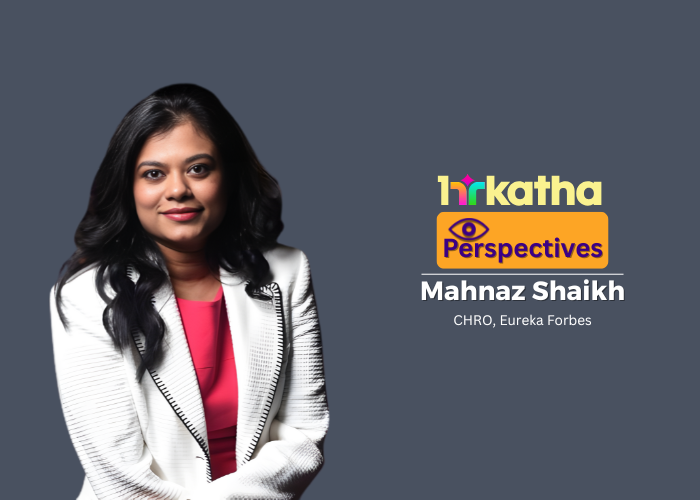
Mahnaz Shaikh, CHRO, Eureka Forbes, navigates these tensions daily. In conversation, she articulates why soft skills differentiate during transformation more than technical expertise, why one culture can genuinely serve multiple generations if anchored in shared values, and why the most complex trade-off involves balancing speed with the time required to align and embed change sustainably.
Ownership mindset over technical mastery
Are you hiring for skills that exist today or capabilities to learn what doesn’t exist yet? What does future-ready talent mean at Eureka Forbes?
The shrinking half-life of skills has fundamentally reshaped how we think about talent. while technical expertise continues to matter—especially in a multi-category, omni-channel business like ours—the true differentiator during transformation is soft skills. Ownership mindset, deep customer centricity and the ability to lead change are non-negotiable.
At Eureka Forbes, “future-ready” talent is defined by people who can navigate digital ecosystems, collaborate seamlessly across functions and challenge the status quo. Our sustained investments in building capabilities across R&D, digital and marketing reflect a long-term belief that learning agility matters as much as present-day competence.
“Not every transformation can optimise speed and alignment at the same time”
One culture, differentiated experiences
Can one culture truly serve five generations simultaneously, or are we heading towards fragmented, personalised employee experiences?
With five generations coexisting in the workplace, our focus is on building a culture anchored in shared organisational values, while delivering differentiated experiences where they truly matter. I firmly believe one culture can serve all cohorts—provided it offers clarity of purpose and space for personal growth.
We place strong emphasis on open and ongoing communication through forums such as SMARTs, quarterly town halls and leadership connects to align people on where we are and where we’re headed. At the same time, flexible benefits, tailored learning interventions and diverse engagement formats help us address varying generational expectations without fragmenting the culture.
“End-to-end accountability accelerates careers faster than ambition alone”
The blended approach to leadership
Do you have the patience and systems to grow your next CEO from within, or has the pace of change made internal development too slow?
Our leadership philosophy is centred on creating accelerator experiences for talent, unconstrained by past experience or functional boundaries. Disruptive growth remains a key ambition, supported by multiple pilots and a sharp focus on emerging growth categories—often led by internal talent.
That said, the pace of transformation sometimes necessitates external expertise to inject new capabilities or accelerate progress. The trade-off is real: internal leadership development requires time, while market realities demand agility. We consciously adopt a blended approach—developing internal successors wherever possible, while complementing them with strategic external hires in specialised or emerging areas.
“HR credibility comes from curiosity about the business, not distance from it”
Managers as transformation advocates
How do you identify people who will be great people managers versus those who should stay in expert tracks? What’s your forcing function to ensure manager quality?
Effective managers are the backbone of organisational health, especially during transformation. When mindsets and ways of working need to change, it is the immediate manager who advocates, addresses concerns and builds confidence in the change journey.
At Eureka Forbes, we take a two-pronged approach to assess manager effectiveness—combining manager-specific culture scores from our Voice of EFL survey with 360-degree feedback for critical roles. We’ve also made deliberate investments in capability building through our flagship Managerial Excellence programme, which has covered all people managers over the past two years.
“If sentiment drops or voices go silent, inclusion is already failing”
Early warning indicators
How do you measure whether diverse hires are actually thriving, not just surviving? What are your early warning indicators that inclusion is failing even when representation numbers look good?
Representation without inclusion is unsustainable. To ensure diverse employees are truly thriving—not merely surviving—we track a combination of indicators: engagement and NPS scores from the Voice of Eureka survey, participation in development programmes, retention trends and qualitative insights from leadership interactions.
Early warning signs of inclusion gaps include declining sentiment, reduced participation in open forums or uneven access to growth opportunities. These signals allow us to intervene proactively through targeted initiatives, manager coaching or environmental improvements.
“You can’t transform ways of working without investing in manager capability”
HR leaders as business translators
For young HR professionals aspiring to work in your sector, what’s misunderstood about HR in this industry? What skills differentiate a great HR leader from someone who’s just competent?
One common misconception about HR is that it operates detached from business realities. HR leaders who truly stand out—regardless of seniority—are deeply curious about the business, engage actively with business teams and can translate business challenges into meaningful people solutions.
The most effective HR leaders combine operational understanding with strategic foresight, stay close to frontline realities, remain approachable so people feel safe sharing what’s really happening, and design system-led solutions that deliver measurable outcomes.
“Developing leaders internally takes time—but market realities don’t always wait”
Credibility through ownership
What’s one unwritten rule at Eureka Forbes that you wish more people understood earlier in their careers?
One unwritten rule at Eureka Forbes is that credibility is earned through a genuine ownership mindset. Individuals who invest time in understanding ground realities, balance ambition with practical constraints and take end-to-end accountability for execution tend to progress faster.
Customer centricity, responsiveness and accountability are critical to how influence is built and careers evolve within the organisation.
“Clarity of purpose matters more than over-personalisation”
Speed versus alignment
What’s the trade-off that keeps you up at night, and how do you make peace with not being able to optimise for everything?
The most complex trade-off I constantly navigate is balancing speed with the time required to align and embed change. Transformation often demands decisive, rapid execution, yet sustainable change requires engagement, dialogue and alignment across levels. Not every initiative can optimise both.
My approach is to move fast where clarity exists and disruption is minimal, but to slow down where alignment is essential—engaging, problem-solving, and then executing well. Staying anchored to the “why” allows me to make peace with this trade-off and manage it with intention.
2 Comments
Well atriculated thoughts on HR functins, & relating their role with business makes the interview an excelkent read. There is something to pickup for all corporate actors : HR professionals, executives from different disciplines, employees, and decision makers at the top level. And yes, business school HR faculty will also benefit from these first hand insights.
The article is worth reading .I appreciate the positive approach of top management paying proper attention on HR functions and considering importance of human assets which appreciates with time.Thanks to the mgt.and staff for developing skills and innovative changes.