



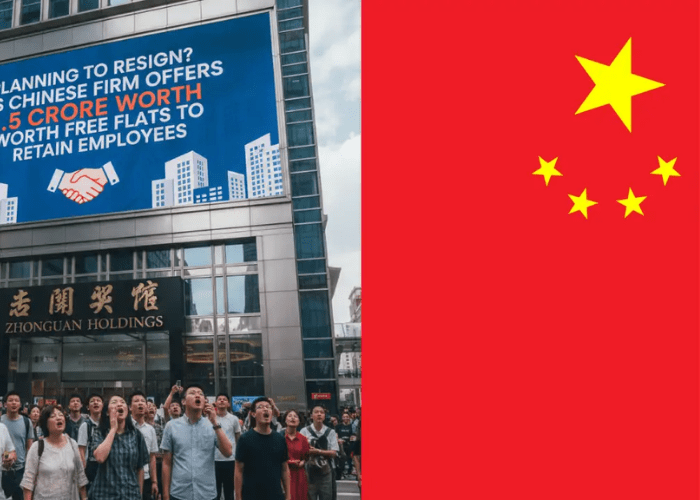
A Chinese auto components manufacturer has drawn widespread attention after unveiling a rare employee- retention incentive that goes beyond bonuses and promotions. Zhejiang Guosheng Automobile, a maker of automotive fasteners based in Wenzhou, has introduced a housing-linked reward scheme under which long-serving employees can receive residential apartments.
As part of this initiative, the company has purchased 18 flats located close to its workplace. The properties were acquired around two years ago, when real-estate prices were relatively lower, with the total investment crossing 10 million yuan, or approximately Rs 12.7 crore. The homes form the core of a long-term plan to retain skilled employees and strengthen leadership continuity within the organisation.

According to recent recruitment and internal disclosures, employees who complete five years with the company become eligible for a flat. Zhejiang Guosheng employs nearly 450 people, and the scheme is designed to recognise sustained commitment rather than short-term performance alone.
So far, five apartments have been allocated this year. Some of the beneficiaries reportedly began their careers in junior positions before progressing into managerial roles. Employees who receive a flat must commit to staying with the company for an additional five years, ensuring long-term engagement on both sides.
The apartments are located within a five-kilometre radius of the company’s facilities and range in size from 100 to 150 square metres. Property prices in the area place the estimated value of each flat between Rs 1.2 crore and Rs 1.5 crore, making the incentive significantly more valuable than conventional retention benefits.
Employees are required to sign a housing agreement and occupy the flats after renovation. Ownership is transferred only after completing the required service period, with recipients expected to cover renovation expenses. The scheme reflects a growing trend among Chinese firms to adopt unconventional benefits to compete for talent in a tightening labour market.
