


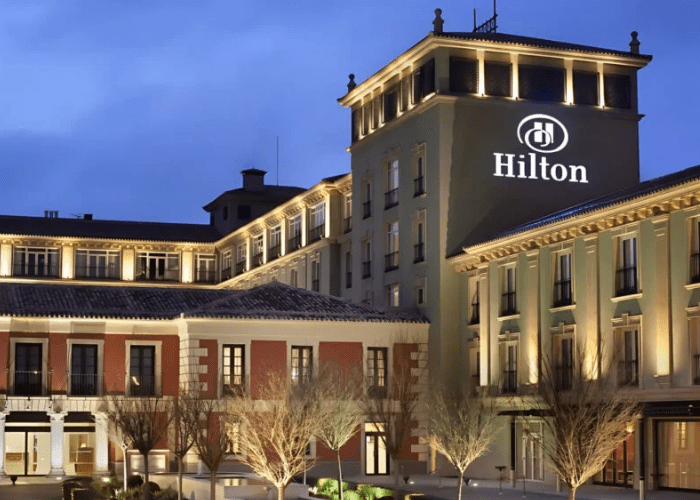
India’s hospitality sector has long been characterised by demanding schedules, rigid hierarchies, and the assumption that guest service trumps employee wellbeing. Six-day working weeks remain standard, flexibility is limited, and career progression often depends more on endurance than talent. For an industry built on creating memorable experiences, it has historically struggled to extend that same care to its own workforce.
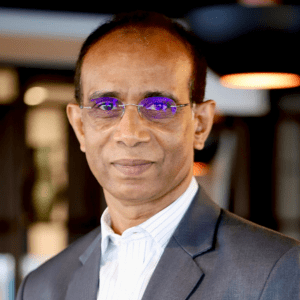
Hilton, with 66 hotels operating or in the pipeline in India and over 4,500 employees, is attempting to challenge these conventions. According to Sabu Raghavan, Vice President-Human Resources, Hilton South Asia, this represents more than operational adjustments. “Whatever we are doing, we are doing it to change the way we work in hospitality,” he explains.
“Whatever we are doing, we are doing it to change the way we work in hospitality.”
Sabu Raghavan, Vice President-Human Resources, Hilton South Asia
Given the sector’s talent shortages and evolving employee expectations, such changes feel both necessary and overdue.
Ambition meets implementation
Hilton’s “Make it Right” programme represents a genuine departure from industry norms. The initiative empowers frontline staff to resolve guest issues without seeking managerial approval—a significant shift from the command-and-control structures that typically govern hotel operations. “When something goes wrong with a guest, our team members don’t need to ask what to do next. They can correct it themselves,” Raghavan notes.
This approach demonstrates real trust in employees and could meaningfully improve both guest satisfaction and staff engagement. However, the programme’s long-term sustainability will depend on clear guidelines and robust training to prevent well-intentioned gestures from creating operational chaos or unexpected costs.
The company’s “It’s Okay” flexibility initiative similarly addresses a genuine industry pain point. Allowing employees to adjust start times, leave early, or swap shifts when personal obligations arise directly challenges hospitality’s reputation for inflexibility. Such policies, whilst operationally complex in a 24/7 industry, signal recognition that employees have lives beyond work—a surprisingly progressive stance in Indian hospitality.
Raghavan’s observations about cultural nuances in workplace interactions also demonstrate thoughtful leadership. He notes that interruptions carry different meanings across cultures: “When we are emotional, we tend to cut off somebody and start talking because we are keen on putting our point forward.” This cultural sensitivity, if translated into management training, could genuinely improve workplace dynamics across Hilton’s diverse workforce.
Validation and investment
External recognition suggests Hilton’s efforts are gaining traction. The company has earned “Best Company to Work For” awards multiple times, and its India operations have earned the global CEO Light and Warmth Award twice consecutively. “Out of 9,000 hotels worldwide, even one nomination is huge. To win twice in a row from India shows the kind of culture we’re building,” Raghavan observes.
Such achievements, whilst partly reflecting the company’s own assessment criteria, do suggest genuine employee satisfaction and cultural differentiation.
More substantively, Hilton’s investment in learning infrastructure appears impressive. Third party partnerships with learning platforms create genuine development opportunities. Hilton University’s 30,000+ programmes represent serious commitment to employee growth—particularly valuable in an industry often criticised for offering dead-end jobs.
The company’s recruitment partnerships also address real market challenges intelligently. The “Recruit, Train, Deploy” model with Job Plus provides 60-90 days of preparation before employees enter hotels, potentially reducing the skills gap that plagues the sector. Similarly, partnering with the Army Welfare Placement Organisation to hire veterans makes strategic sense, given military personnel’s discipline and service orientation.
Genuine progress with practical limits
Hilton’s inclusion efforts deserve particular recognition. Employing acid-attack survivors, differently-abled individuals, and supporting LGBTQ+ staff through Team Member Resource Groups represents meaningful commitment beyond corporate rhetoric. Nearly 25 per cent female workforce participation, whilst not exceptional, is respectable for Indian hospitality.
“These groups let people express themselves where they may not feel comfortable talking to HR or leaders directly,” Raghavan explains. Such platforms can genuinely improve workplace belonging when properly implemented.
The company’s advocacy for five-day working weeks in hospitality shows real leadership on industry reform. If successfully implemented, this could trigger broader sectoral change—though the practical challenges of 24/7 operations mean this may work better in some roles than others.
However, legitimate questions remain about scaling these initiatives. Hilton plans to double its Indian presence within four years, expanding from metropolitan centres to smaller cities with different labour markets and cultural expectations. Maintaining consistent culture and policies across such diverse geographies while managing rapid growth represents a significant operational challenge.
The company’s emphasis on employee voice through feedback systems is commendable, though the ultimate test will be whether this translates into genuine career advancement for underrepresented groups and sustained engagement during economic downturns when cost pressures typically intensify.
Evolution in progress
Hilton’s approach represents thoughtful evolution rather than revolutionary transformation. The company appears genuinely committed to improving working conditions and creating meaningful career pathways—initiatives that address real industry problems rather than superficial concerns.
The integration of flexibility policies with empowerment programmes and learning opportunities shows systems thinking that goes beyond piecemeal HR initiatives. When an acid-attack survivor finds meaningful employment or a veteran transitions successfully into hospitality, these represent genuine human impact stories.
Yet challenges remain. Cultural transformation at scale is notoriously difficult, and maintaining consistency across rapid expansion will test the durability of these initiatives. The company’s own assessments, whilst positive, would benefit from independent verification over time.
A model worth watching
What emerges is a company taking calculated risks to differentiate itself in a crowded market whilst addressing genuine employee needs. Hilton’s people-centric strategy may not revolutionise Indian hospitality overnight, but it offers a compelling blueprint for how established players can adapt to changing workforce expectations.
The ultimate verdict will depend not on current employee satisfaction scores or awards, but on whether these initiatives survive the pressures of aggressive expansion and economic uncertainty. For now, Hilton’s experiment represents one of the more serious attempts to modernise hospitality employment in India—an effort worth monitoring as the industry grapples with its own future.