

Close Menu
    Facebook X (Twitter) Instagram
    • Our Story
    • Partner with us
    • Reach Us
    • Career
    Subscribe Newsletter
    HR KathaHR Katha
    • Exclusive
      • Exclusive Features
      • Perspectives
      • Friday Features
      • herSTORY
      • Rising Stars
      • Case-In-Point
      • Point Of View
      • Research
      • HR Pops
      • Dialogue
      • Movement
      • Profile
      • Beyond Work
      • By Invitation
    • Brief News
      • Global HR News
      • Compensation & Benefits
      • Diversity
      • Events
      • Gen Y
      • Hiring & Firing
      • HR & Labour Laws
      • Learning & Development
      • Merger & Acquisition
      • Performance Management & Productivity
      • Talent Management
      • Tools & Technology
      • Work-Life Balance
    • Special
      • Editorial
      • HR Forecast 2026
      • Cover Story
      • HR Forecast 2024
      • HR Forecast 2023
      • HR Forecast 2022
      • HR Forecast 2021
      • HR Forecast 2020
      • HR Forecast 2019
      • New Age Learning
      • Coaching and Training
      • Learn-Engage-Transform
    • Studio
      • The CHRO Playbook
      • Quick HR Insights
      • The Corner Office
    • Reports
      • Whitepaper
        • HR Forecast 2024 e-mag
        • Future-proofing Manufacturing Through Digital Transformation
        • Employee Healthcare & Wellness Benefits: A Guide for Indian MSMEs
        • Build a Future Ready Organisation For The Road Ahead
        • Employee Experience Strategy
        • HRKatha 2019 Forecast
        • Decoding and Driving Employee Engagement
        • One Platform, Infinite Possibilities
      • Survey Reports
        • Happiness at Work
        • Upskilling for Jobs of the Future
        • The Labour Code 2020
    • Forums
      • HRKatha Inner Circle
      • HRKatha Futurecast
      • Leadership Summit 2025
      • Rising Star Leadership Awards
      • HRKatha Futurecast 2025
      • Automation.NXT
      • The Great HR Debate
    WhatsApp LinkedIn X (Twitter) Facebook Instagram
    HR KathaHR Katha
    Home»Exclusive Features»Point Of View»POV: When does a people strategy truly work beyond the HR dashboard?
    Point Of View

    POV: When does a people strategy truly work beyond the HR dashboard?

    When the HR dashboard looks healthy, what tells you whether the people strategy is actually changing the organisation?
    mmBy Radhika Sharma | HRKathaOctober 5, 2026Updated:October 6, 20265 Mins Read8424 Views
    Share LinkedIn Twitter Facebook WhatsApp
    HR dashboard
    Share
    LinkedIn Twitter Facebook WhatsApp

    A people strategy can look healthy on paper: attrition is under control, engagement scores are up, learning hours are rising and internal mobility is moving in the right direction. But numbers tell HR what is happening, not why it matters. They do not always reveal whether a people strategy is actually changing how employees think, behave and work.

    The real test, therefore, may lie outside the dashboard: in the conversations managers have, the talent organisations retain and develop, the decisions leaders make and whether employees begin to own initiatives that once belonged to HR.

    So what should HR leaders look for when assessing whether a people strategy has moved beyond metrics and begun creating meaningful organisational impact?


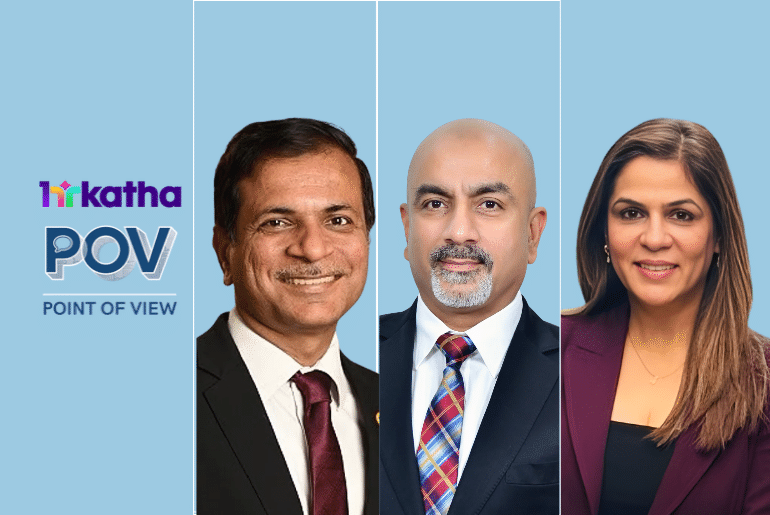
    Ayush Gupta, Director – HR, GAIL

    A people strategy is working when it becomes visible in how employees think and behave, not just in what the dashboard shows.

    In an organisation such as GAIL, spread across the length and breadth of the country, the dashboard can tell us about attrition, engagement, learning hours, diversity, promotions or hiring timelines. But these are indicators. The real test is what happens at a pipeline location, plant, project site or office when HR is not around.

    The signals worth watching are whether managers are having better conversations with their teams, whether employees are speaking up, taking ownership and collaborating across functions and locations, and whether experienced employees are actively mentoring the next generation.

    Some of the strongest signals are informal. When employees voluntarily participate in initiatives such as AI Tarang, GAIL Abha, Spandan or GAIL Got Talent, when ideas travel from the field to the leadership table and when employees themselves become ambassadors of the organisation, the people strategy is beginning to come alive.

    Ultimately, the question is whether the business feels the difference: faster execution, stronger innovation, better collaboration, greater resilience and a deeper sense of ownership. HR succeeds when a people initiative stops being seen as an “HR initiative” and becomes part of how the organisation operates.

    Takeaway: The strongest evidence of a people strategy is often found in employee behaviour, particularly when people begin owning initiatives without HR having to push them.


    Vinay Dhingra, Senior Director – HR, Admin, IT, CSR & Corporate Affairs, HMSI (Honda)

    A people strategy proves its value when development translates into retention and a sustainable leadership pipeline.

    The success of any people strategy has to show up beyond the HR dashboard. In manufacturing, that could be visible in quality, retention or the organisation’s ability to build a strong internal talent pipeline.

    At Honda, one of the clearest indicators of impact is the strength of our internal talent pipeline. Senior positions are rarely filled from outside because capable people are developed from within. Some external hiring does take place to maintain balance, but the emphasis remains firmly on building and retaining talent internally.

    Retention tells its own story. Almost 60 per cent of our employees have been with us for more than ten years, while employees with more than five years of tenure account for around 70 per cent of our workforce. These numbers indicate that the organisation has been able to retain people while building the capability required for future leadership roles.

    When assessing whether a people strategy is working, the questions worth asking are: Are we developing people who can take on larger roles? Are employees staying long enough to build deep organisational knowledge? Do we have capable talent ready internally when leadership positions open up?

    That is when investment in people begins translating into organisational capability rather than remaining an HR metric.

    Takeaway: A people strategy proves its value when investments in development translate into tangible outcomes such as retention and a sustainable internal leadership pipeline.


    Jyoti Abrol, Senior Vice President – HR, Schindler India

    A people strategy is truly successful when it stops being an HR agenda and becomes part of how the organisation thinks and decides.

    The evidence lies not just in metrics, but in whether leaders are making better talent decisions, managers are taking greater ownership and colleagues are experiencing meaningful changes in how work gets done.

    Jyoti Abrol

    One of the simplest tests is this: would these behaviours continue if HR stopped driving them?

    An initiative can perform well while HR is actively pushing it. But the real measure of success is what happens once the formal intervention becomes less visible. Do managers continue having the right conversations? Do leaders continue making people decisions with the same intent? Do employees continue demonstrating the behaviours the organisation was trying to build?

    When people strategy becomes embedded in leadership behaviour, organisational capability and business outcomes, it has moved from being a programme to becoming part of the culture.

    The dashboard still has an important role. It tells us whether progress is being made and provides data points for understanding what is changing. What it cannot establish on its own is whether that change has taken root and become sustainable.

    Ultimately, the dashboard measures progress. The organisation’s behaviour reveals the impact.

    Takeaway: The real proof of a people strategy is whether the desired behaviours survive without HR actively driving them. That is when strategy becomes culture.

    Ayush Gupta CHRO Culture diversity Employee Employee Benefits Employee Engagement employees employer Employment Engagement Gail Honda Motorcycle and Scooter India (HMSI) HR HR dashboard Human Resources Jyoti Abrol people People strategy Productivity Recruitment Schindler India Skill Development Training Vinay Dhingra Workforce Workplace
    Share. LinkedIn Twitter Facebook WhatsApp
    mm
    Radhika Sharma | HRKatha

    Radhika is a commerce graduate with a curious mind and an adaptable spirit. A quick learner by nature, she thrives on exploring new ideas and embracing challenges. When she’s not chasing the latest news or trends, you’ll likely find her lost in a book or discovering a new favourite at her go-to Asian eatery. She also have a soft spot for Asian dramas—they’re her perfect escape after a busy day.

    Leave A Reply Cancel Reply

    Related Posts

    Lazy girl jobs: When doing your job became enough

    November 17, 2026

    Birlasoft wants to measure skills by deployment, not learning hours

    November 17, 2026

    From loyalty to ownership: Chai Kaapi bets on ESOPs to retain talent

    November 17, 2026

    Green card overhaul may change global hiring strategies

    November 17, 2026
    zoha
    Editorial

    Companies owe their people more than what is legal

    When Canva announced a restructuring affecting 1,271 employees, or 22 per cent of its workforce,…

    Hard work built India’s global reputation. Availability cannot define its future

    I must have been in school when I first heard the slogan. I was passing…

    EDITOR'S PICKS

    Lazy girl jobs: When doing your job became enough

    November 17, 2026

    Birlasoft wants to measure skills by deployment, not learning hours

    November 17, 2026

    POV: Is probation still necessary, or does it undermine trust?

    November 16, 2026

    Companies owe their people more than what is legal

    November 15, 2026
    Latest Post

    Lazy girl jobs: When doing your job became enough

    HR Pops November 17, 2026

    What does a ‘Lazy girl job’ mean? A job with reasonable hours, manageable expectations, predictable…

    Birlasoft wants to measure skills by deployment, not learning hours

    Exclusive Features November 17, 2026

    An employee can complete an AI certification, spend dozens of hours in training and still…

    From loyalty to ownership: Chai Kaapi bets on ESOPs to retain talent

    Compensation & Benefits November 17, 2026

    Indore-based café chain Chai Kaapi has introduced Employee Stock Ownership Plans (ESOPs) for employees, turning…

    Green card overhaul may change global hiring strategies

    Global HR News November 17, 2026

    The Trump administration has proposed major changes to the employer-sponsored green card process in the…

    Asia's No.1 HR Platform

    Facebook X (Twitter) Instagram LinkedIn WhatsApp Bluesky
    • Our Story
    • Partner with us
    • Career
    • Reach Us
    • Exclusive Features
    • Cover Story
    • Editorial
    • Dive into the Future of Work: Download HRForecast 2024 Now!
    © 2026 HRKatha.com
    • Disclaimer
    • Refunds & Cancellation Policy
    • Terms of Service

    Type above and press Enter to search. Press Esc to cancel.