


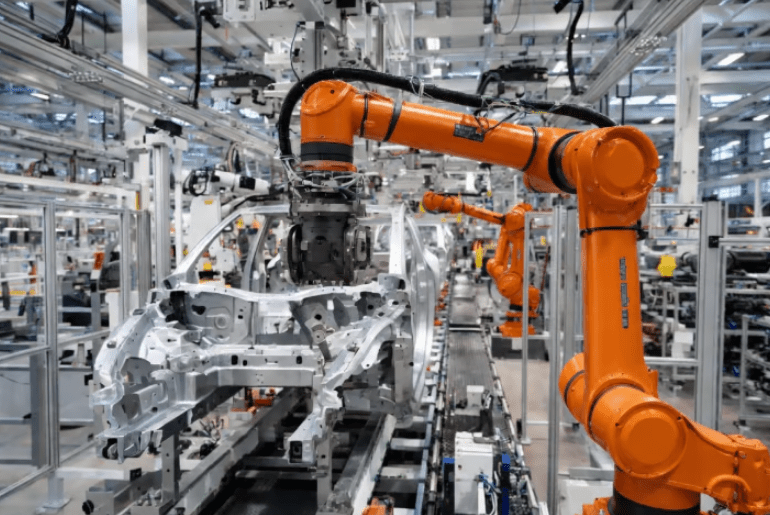
General Motors (GM) has expanded the use of collaborative robots, or cobots, at its Factory Zero electric vehicle plant in Michigan as part of its manufacturing modernisation strategy. The move comes alongside workforce reductions at the facility, where reports indicate that more than 1,000 employees have been affected.
Factory Zero is one of GM’s flagship electric vehicle plants and has been at the centre of the company’s efforts to adopt advanced manufacturing technologies. Around 50 cobots have now been introduced to assist employees with repetitive assembly-line tasks, including fitting vehicle body panels and supporting other production processes.
According to GM, the robots are designed to work alongside employees rather than replace them. The company said the technology is intended to improve workplace safety, reduce the physical strain of repetitive work, increase production flexibility and enhance manufacturing efficiency. It also confirmed that some employees impacted by operational changes have been placed on temporary layoff, although it has not specified when they may return.
The rollout has drawn criticism from the United Auto Workers (UAW), which argues that increased automation is reducing employment opportunities for union members. The union has reportedly filed grievances over the deployment of cobots and questioned whether the technology is contributing to lower staffing levels at the plant.
The latest development comes as GM continues broader restructuring across its business. In recent months, the automaker has reduced headcount in engineering and information technology functions while simultaneously increasing investments in artificial intelligence, robotics and advanced manufacturing.
The expansion of collaborative robotics highlights a broader shift across the automotive industry as manufacturers accelerate electric vehicle production and adopt smarter factory technologies. While companies view automation as a way to improve productivity and worker safety, labour unions continue to raise concerns over its impact on jobs, making the balance between technological advancement and workforce security an increasingly important issue for employers and HR leaders.
