



Pharmaceutical companies operate at a peculiar intersection: scientific rigour meets human empathy, regulatory compliance encounters rapid innovation, and every people decision indirectly affects patient lives. This creates unique pressures for human resources leadership—balancing laboratory precision with organisational agility, fostering innovation within strict compliance frameworks, and maintaining purpose when commercial pressures intensify.
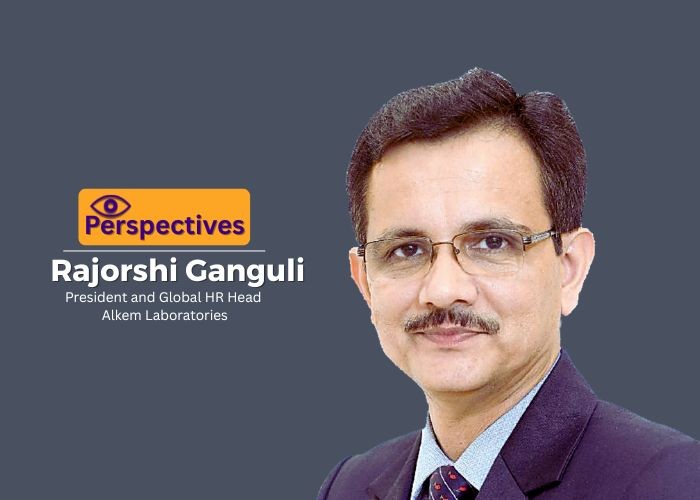
Dr Rajorshi Ganguli, president and global HR Head, Alkem Laboratories, navigates these tensions whilst managing a workforce spanning five generations. Author of Winning with Gen Z, he articulates why psychological safety in Indian workplaces requires contextualisation rather than imitation of Western models, why leadership development must reach every organisational level, and why the CHRO of the future must think like an economist, act like a technologist, and lead like a humanist.

Harnessing generational diversity
Can a single organisational culture genuinely serve baby boomers and Gen Z simultaneously, or is fragmentation inevitable?
Leading a multi-generational workforce is both challenge and opportunity. Each generation brings unique energy—the wisdom and patience of baby boomers, the pragmatism of Gen X, the ambition of millennials, and the agility and curiosity of Gen Z.
Our aim is not to homogenise these differences but to harness them. We consciously build bridges through initiatives and forums that connect people across age groups and experiences. The workplace of the future won’t be defined by one uniform culture but by a unified purpose expressed through personalised experiences.
What binds us together is not age but aspiration. As long as the “why” unites us, the “how” can flex. Organisations that turn generational diversity into collaboration will not only be inclusive but truly future-ready.
“Leadership today is about readiness, not hierarchy.”
Contextualising psychological safety
How do you build cultures where junior employees can challenge senior leaders without it being seen as disrespectful?
Indian workplaces are rooted in deep cultural strengths—respect, empathy and strong relationships. To build psychological safety, we must pair this respect with voice. True inclusion happens when employees can express differing views without fear of being disrespectful.
At Alkem, initiatives such as open forums, skip-level interactions and frequent leader-connect sessions foster ease of access to senior management, allowing hierarchy to give way to honest dialogue.
Psychological safety in India is not about replicating Western models but contextualising them. It’s about creating environments where warmth and honesty coexist—where respect means being heard. When leaders listen with intent and act on feedback, trust becomes structural, not sentimental.
Our culture doesn’t need to lose its warmth to gain openness; it simply needs to make respect reciprocal.
“Build for differentiation, borrow for acceleration, and buy only when essential.”
Democratising development
How do you scale meaningful development across thousands of employees without diluting quality or breaking the budget?
Leadership today is about readiness, not hierarchy. We’ve democratised development so that learning reaches every level—from the shop floor to the C-suite.
Our approach blends digital microlearning, internal coaching, classroom programmes and experiential problem-solving projects. Development accelerates when individuals are entrusted with complex, cross-functional responsibilities. The shift is from programmes to ecosystems—where learning is embedded in work, not isolated in workshops.
Success is measured not by attendance but by application. By enabling self-driven growth through initiatives such as skill passports and internal mobility challenges, we’re building a culture where development is continuous and contextual.
True leadership pipelines emerge when every employee views learning as an integral part of their work—not apart from it.
“Our culture doesn’t need to lose its warmth to gain openness.”
Build, borrow or buy
For critical capabilities like AI or sustainability, how do you decide whether to build internal talent, hire externally, or partner with specialists?
In a world where technology and talent needs evolve rapidly, capability building must balance core building with speed borrowing.
Capabilities that define who we are—leadership, culture, ethics and customer centricity—are built internally. In fast-evolving domains such as artificial intelligence, sustainability and data analytics, we partner strategically to learn and adapt quickly.
Our guiding principles are clear: build for differentiation, borrow for acceleration and buy only when essential. The goal is not to own every skill but to create access to dynamic learning ecosystems.
Long-term sustainability depends on reskilling for relevance and hiring for potential. Capability building today is no longer just an HR agenda—it’s an enterprise priority that future-proofs the organisation.
“What binds us together is not age, but aspiration.”
HR in pharma’s unique context
For young HR professionals aspiring to work in pharmaceuticals, what’s misunderstood about HR in this industry?
Pharma HR operates at the intersection of science and empathy. Every people decision—from research and development to field-force management—indirectly impacts patient lives. That makes purpose our most powerful motivator.
The modern HR leader must bridge laboratory innovation with human connection, understanding both molecules and mindsets. What excites me most is how HR now drives transformation in this sector—building agile R&D teams, fostering digital adoption and championing wellbeing in high-pressure environments.
The differentiator lies in combining empathy with agility, balancing compliance with creativity. As the industry embraces AI and digital health, HR’s mission is to ensure that whilst science advances, the organisation’s soul remains deeply human.
“The CHRO of the future will think like an economist, act like a technologist, and lead like a humanist.”
The next-generation CHRO
If someone is entering HR today and wants to be a CHRO in 15 years, what should they be learning that isn’t in traditional HR curriculums?
The CHRO of the future will be a strategist first and a specialist second—someone who can seamlessly connect business, technology and human behaviour.
Beyond traditional HR expertise, they’ll need fluency in analytics, digital tools and financial levers that drive enterprise value. Equally critical will be design thinking, storytelling and neuroscience-based insights that influence behaviour and culture.
Tomorrow’s CHROs must think like economists, act like technologists and lead like humanists. My advice to young professionals is simple: stay curious, learn across domains, and build the courage to ask powerful questions before giving answers.
The CHRO of the future will not just manage people but architect transformation, translating human potential into lasting competitive advantage.